

Accademia Artists | Location Schedule Tickets Authorizations
Artists Tintoretto | Veronese |
Tintoretto Crucifixion | Cain Abel | Miracle St Mark | Jesus Temple | Translation St Mark | Lady Treasurers | St George Princess | St Mark Saracen | Adam Eve | Assumption Virgin | Deposition Christ | Creation Animals | Mocenigo | Soranzo | St Jerome Andrew
Tintoretto’s “Saint Louis, Saint George and the Princess” at the Accademia Galleries in Venice
Tintoretto (1518 – 31 May 1594) – “Saint Louis, Saint George and Princess Saint Margaret of Antioch”
Painting – Oil on canvas (230 x 150 cm) 1552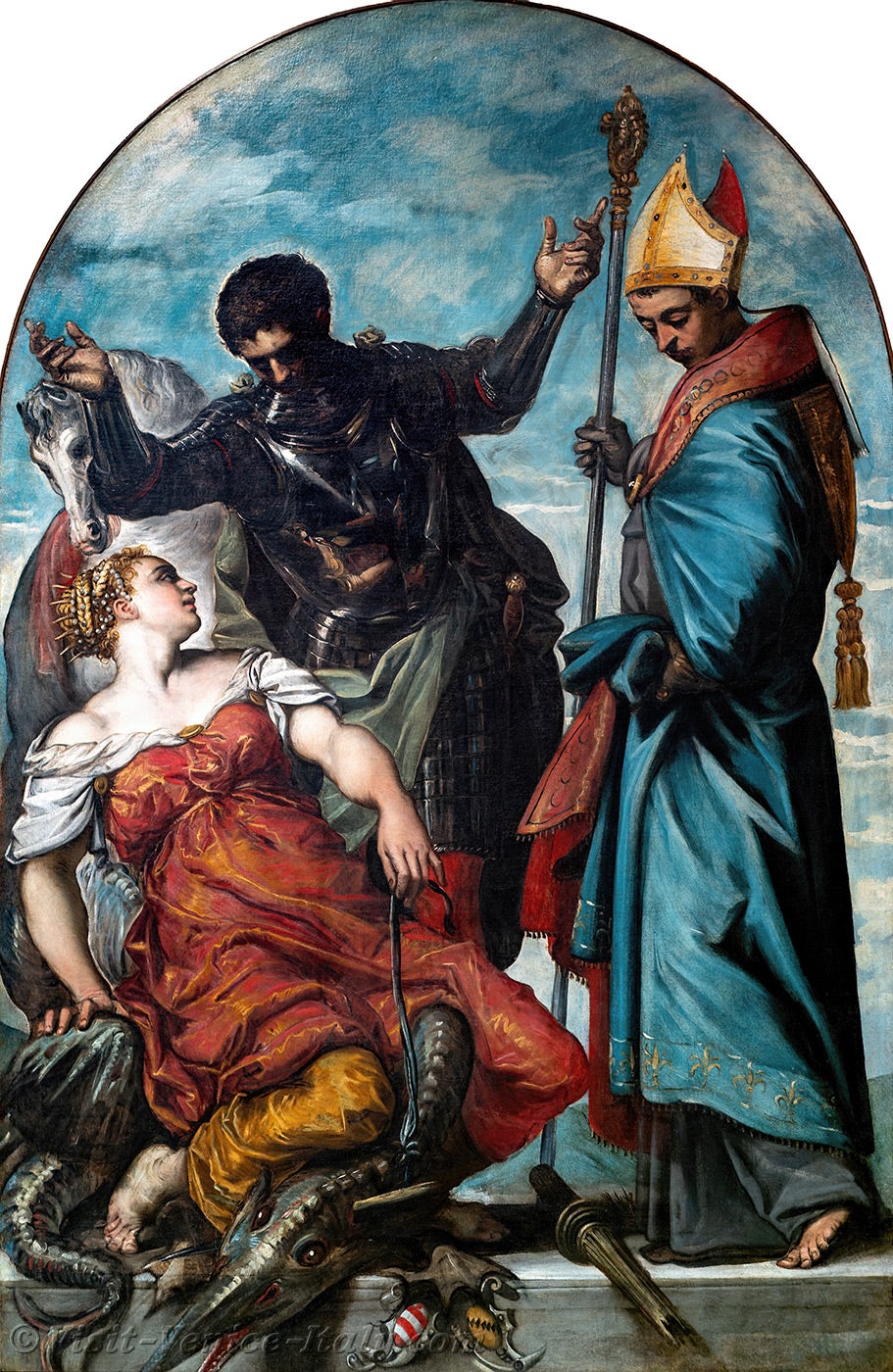
St Georges Princesse This painting was commissioned to decorate the ‘Sala dei Magistrati al Sale’ in the Palazzo dei Camerlenghi in Venice, next to the Rialto Bridge.
Its commissioners were the magistrates Giorgio Venier and Alvise Foscarini.
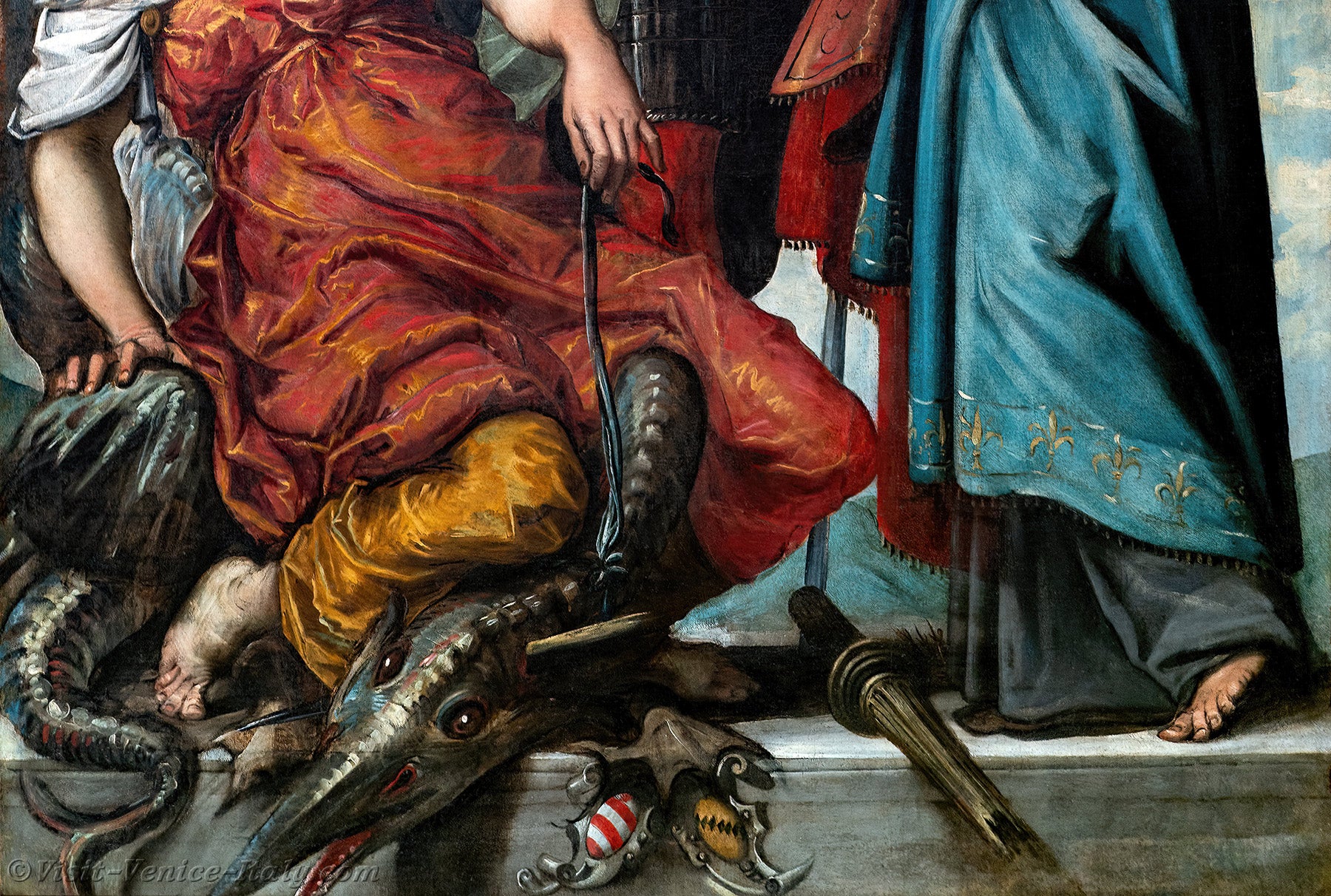
Their respective coats of arms are depicted at the bottom of Tintoretto’s canvas.
In keeping with the tradition of newly appointed magistrates to the Camerlenghi, the painting they commissioned to decorate the palace depicts the saints corresponding to their first names: Saint George for Giorgio Venier and Saint Louis for Alvise Foscarini.
In Venice, the church of Sant’Alvise is dedicated to Saint Louis, the Bishop of Toulouse, hence the saint’s inclusion in this painting to represent the magistrate Alvise Foscarini, given the existing connection.
Here, Tintoretto revisits the theme of Saint Margaret and the dragon.
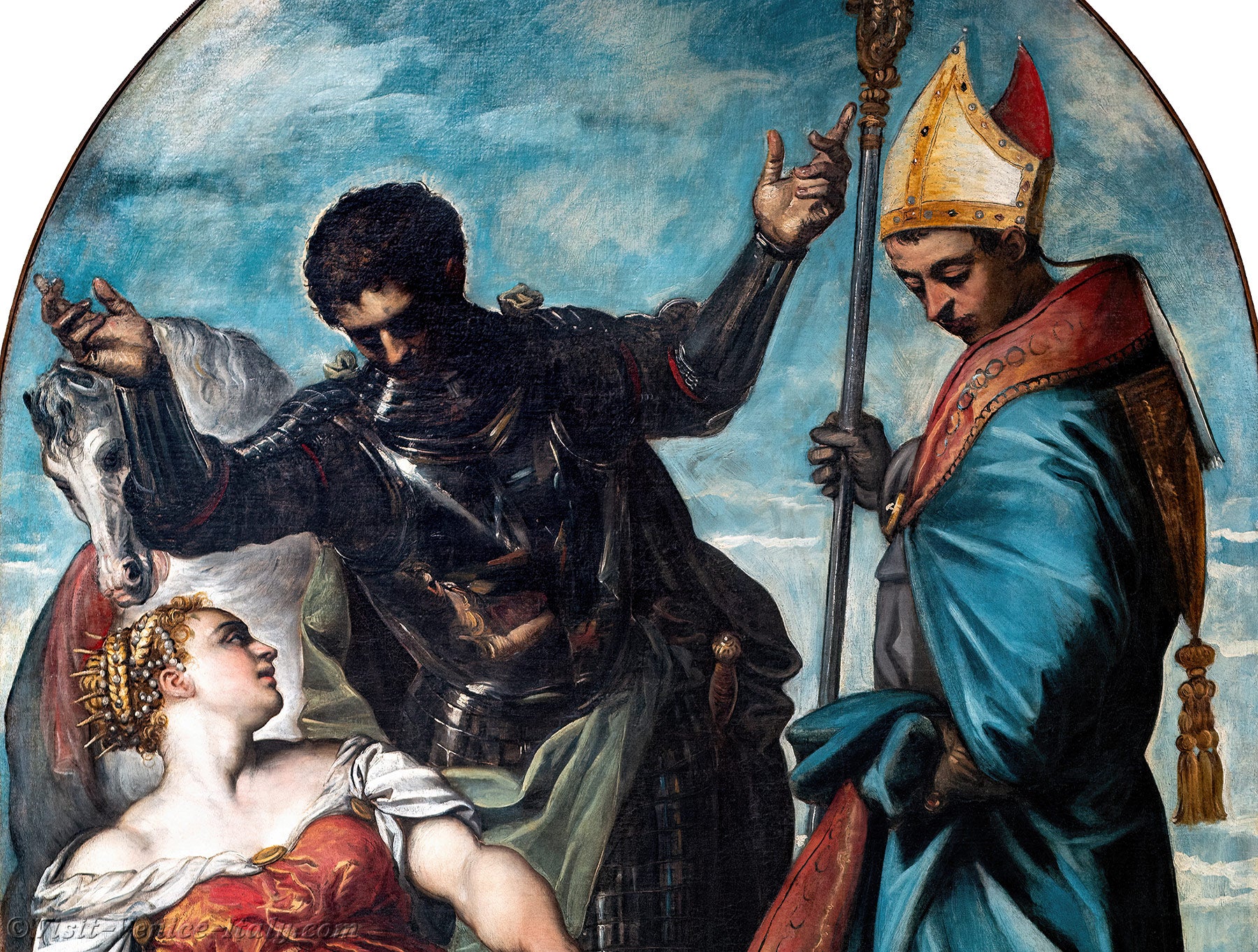
St Georges Princesse Saint Margaret of Antioch was often invoked by Christians for the protection of pregnant women.
Indeed, according to legend, a dragon is said to have swallowed the saint and she is said to have emerged alive and without a scratch!
Of course, her miraculous deliverance was made possible by the cross she was carrying, with which she pierced the dragon’s belly to escape.
After the Council of Trent, the image of the saint emerging from the dragon changed, and it became accepted practice no longer to depict the saint emerging from its belly, but rather with the dragon at the saint’s feet, kept firmly on a lead or with one foot resting on the animal.
In this painting, Tintoretto has therefore revisited this theme, taking a few liberties with the official and religious iconography of the time.
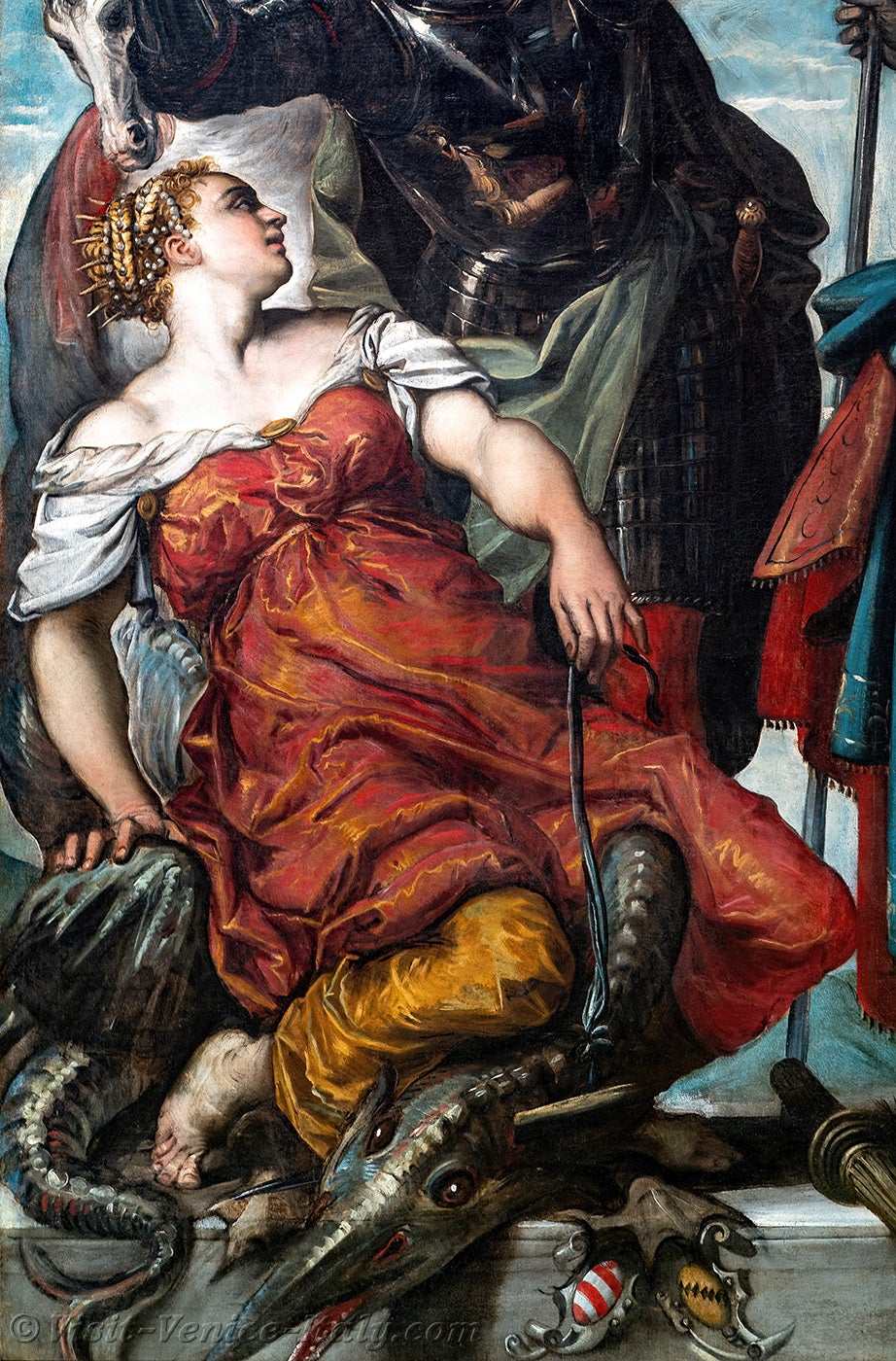
St Georges Princesse It is no longer Saint George who tames or slays the dragon; it is Saint Margaret who not only keeps it on a lead, but also rides it.
This iconographic adaptation, deemed by some to be on the verge of indecency, was therefore not particularly well received at the time when Tintoretto painted his picture.
However, from an artistic point of view, this ride on the dragon is particularly well executed and fits in perfectly with Saint George, who stands behind her and towards whom she turns to receive what appears to be congratulations!
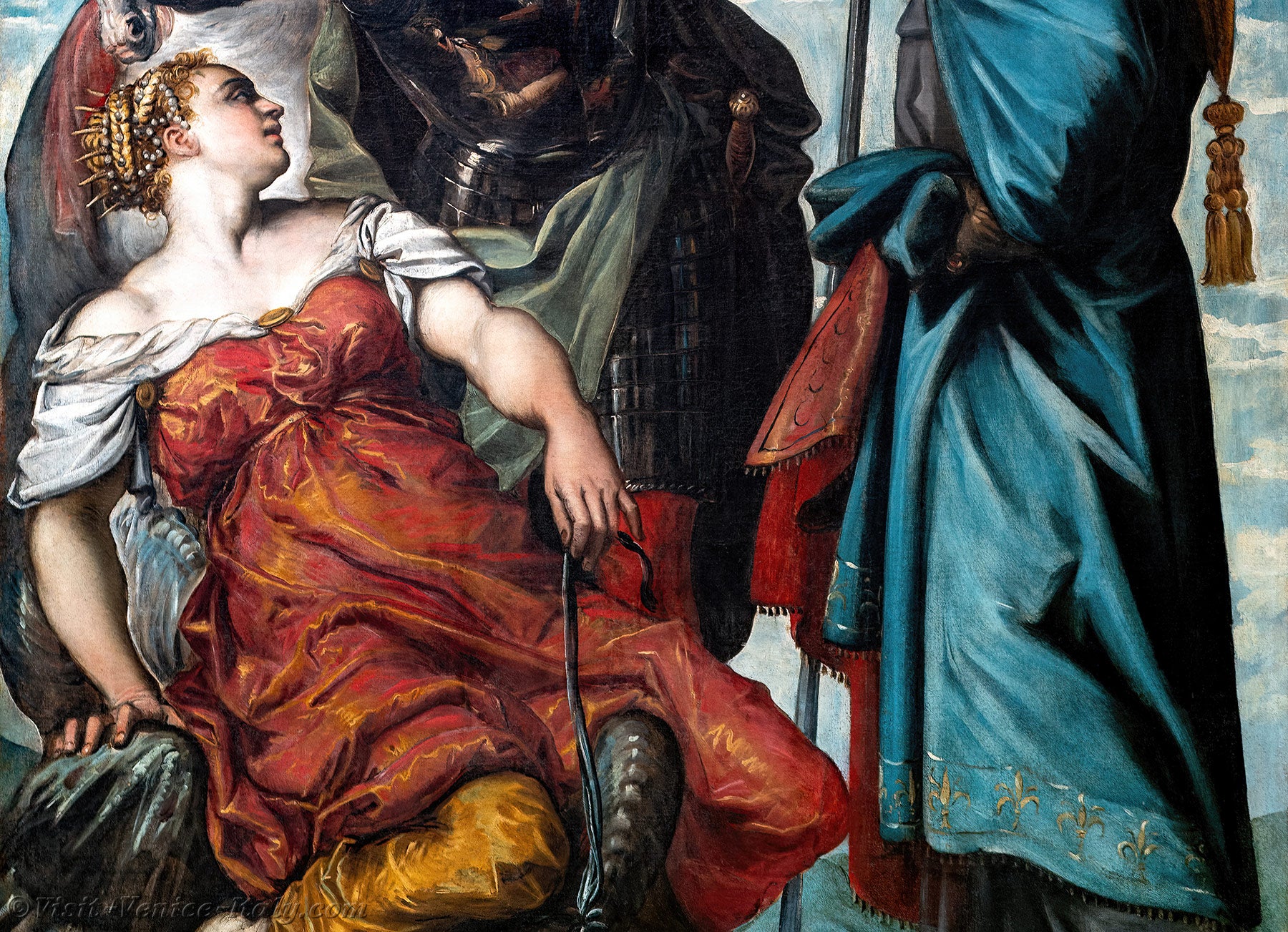
To the right of the scene, set apart from Saint George and Saint Margaret, stands Saint Louis of Toulouse, identifiable by the gold fleurs-de-lis embroidery on his garment.
He appears deeply lost in thought.
The blue colour of his clothing also contrasts sharply with the colours of the other two saints, which further sets Saint Louis apart in this painting.
Tintoretto Crucifixion | Cain Abel | Miracle St Mark | Jesus Temple | Translation St Mark | Lady Treasurers | St George Princess | St Mark Saracen | Adam Eve | Assumption Virgin | Deposition Christ | Creation Animals | Mocenigo | Soranzo | St Jerome Andrew
Artists Tintoretto | Veronese |
Accademia Artists | Location Schedule Tickets Authorizations
Back to Top of Page