

Archaeological Artworks | Location Schedule Tickets Authorizations
Artworks The Goddesses | The Dignitaries
Dignitaries Agrippina | Antonia | Faustina | Caracalla | Hadrian | Marcus Aurelius | Philip II | Tiberius | Trajan | Verus | Vitellius
Emperor Philip II the Younger at the Archaeological Museum of Venice
“Emperor Philip II the Younger”
Sculpture – Marble (Height 47 cm) 247–249Philip II the Younger (237–249) was the son of Emperor Marcus Julius Philippus, known as Philip the Arab (204–249) according to Aurelius Victor’s book, “Liber de Caesaribus” written in 360, a nickname that has endured to this day.
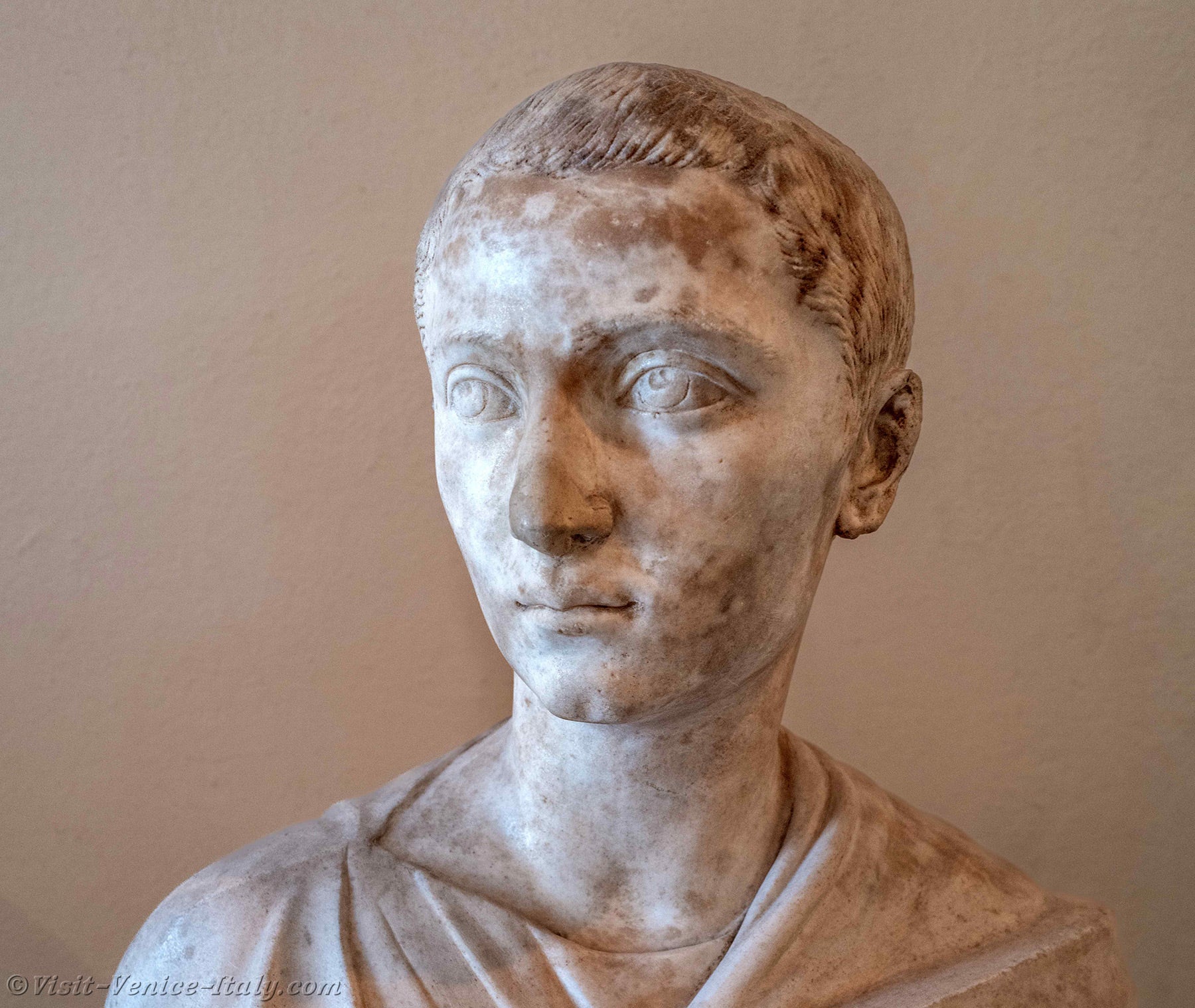
Philip II Junior A nickname based on the fact that he was born in the Roman province of Arabia, a province that stretched from the Sinai to Jordan.
Philip II the Younger was officially named ‘Caesar’ on the day his own father became emperor, at the age of just seven, before being named ‘Augustus’ at the age of ten!
Although filled with honours, Philip II’s life was, unfortunately, very short.
During the Battle of Verona, Philip the Arab had to face General Decius, a prefect to whom Philip himself had entrusted military command.
But at that time, the Roman legions were dissatisfied with the decisions taken by Philip the Arab and Decius took advantage of this to turn them against Philip for his own benefit.
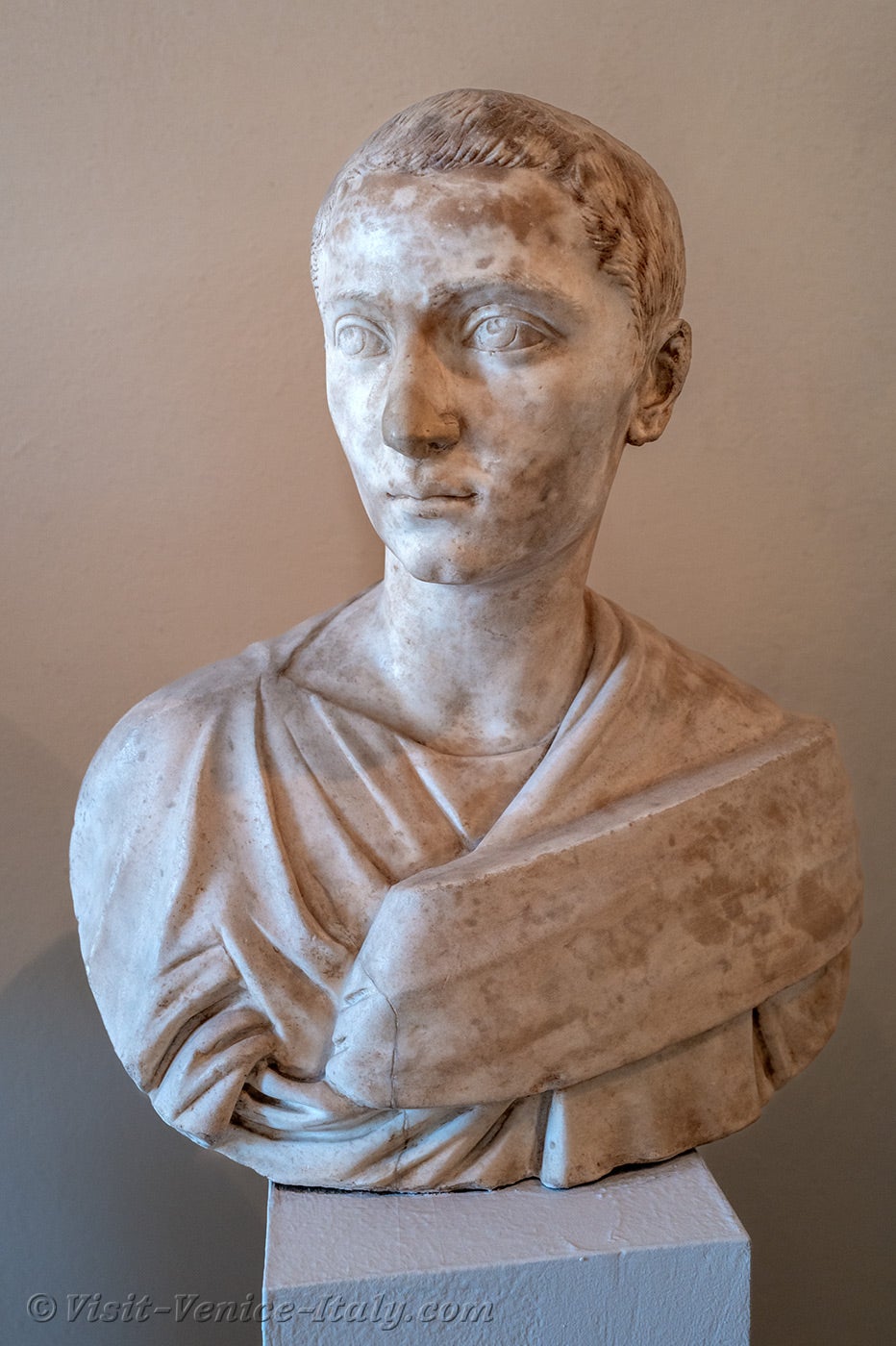
Philip II Junior Following this revolt by part of the legions against Emperor Philip the Arab, the two sides clashed at Verona.
Decius emerged victorious and Philip the Arab lost his life there in 249, probably murdered by his own soldiers.
To succeed Philip the Arab, Decius first had to get rid of Philip II, who held the titles of Caesar and Augustus and, in effect, automatically became the new emperor following his father’s death.
Decius therefore hastened to have the young Philip II, aged 12, assassinated by the soldiers of the Praetorian Guard.
Thus Decius became emperor from 249 to 251, when he was killed by the Goths, thereby becoming the first Roman emperor to be killed in battle against an external enemy.
Dignitaries Agrippina | Antonia | Faustina | Caracalla | Hadrian | Marcus Aurelius | Philip II | Tiberius | Trajan | Verus | Vitellius
Artworks The Goddesses | The Dignitaries
Archaeological Artworks | Location Schedule Tickets Authorizations
Back to Top of Page