

Archaeological Artworks | Location Schedule Tickets Authorizations
Artworks The Goddesses | The Dignitaries
Goddesses Aphrodite | Artemis | Athena | Demeter | Hecate | Hermafroditus
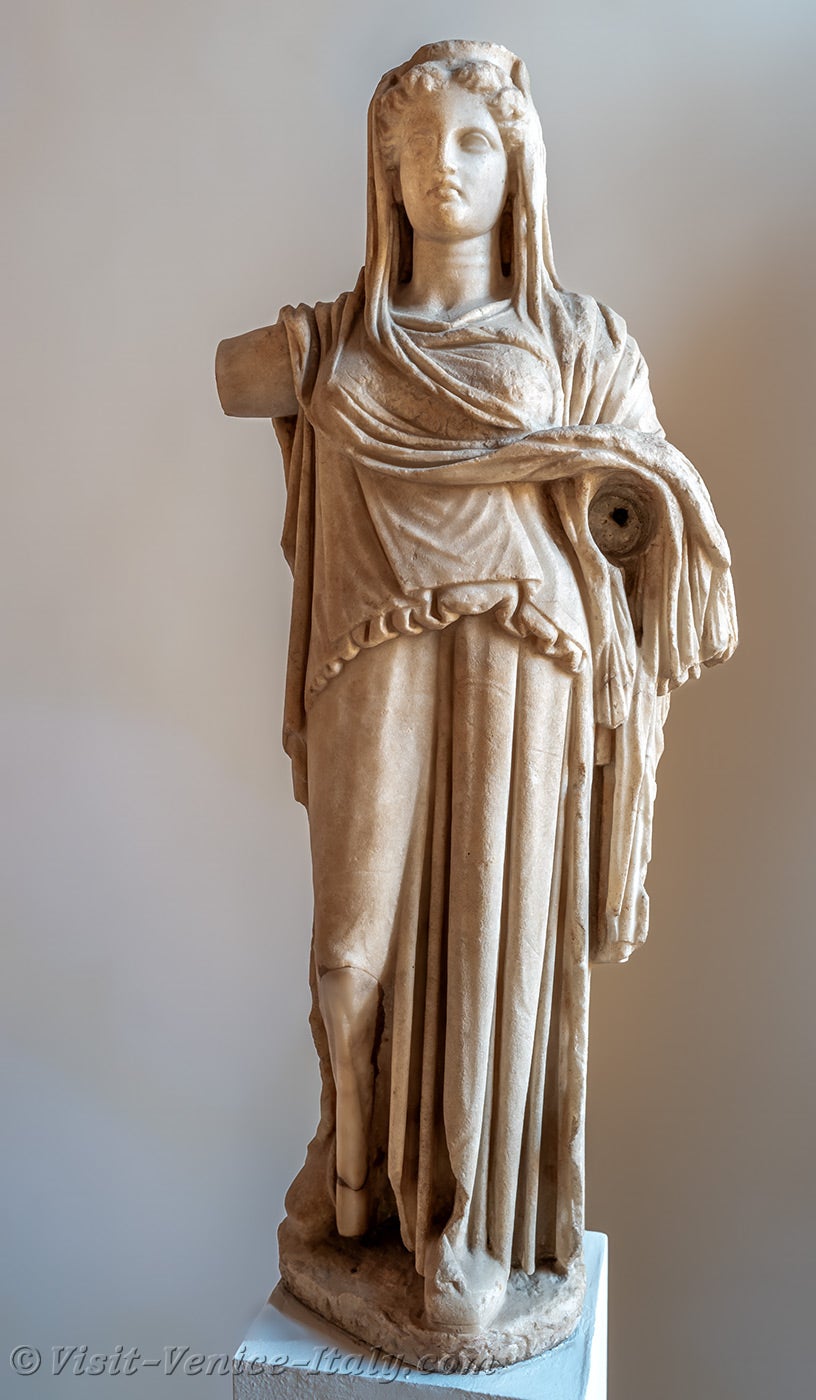
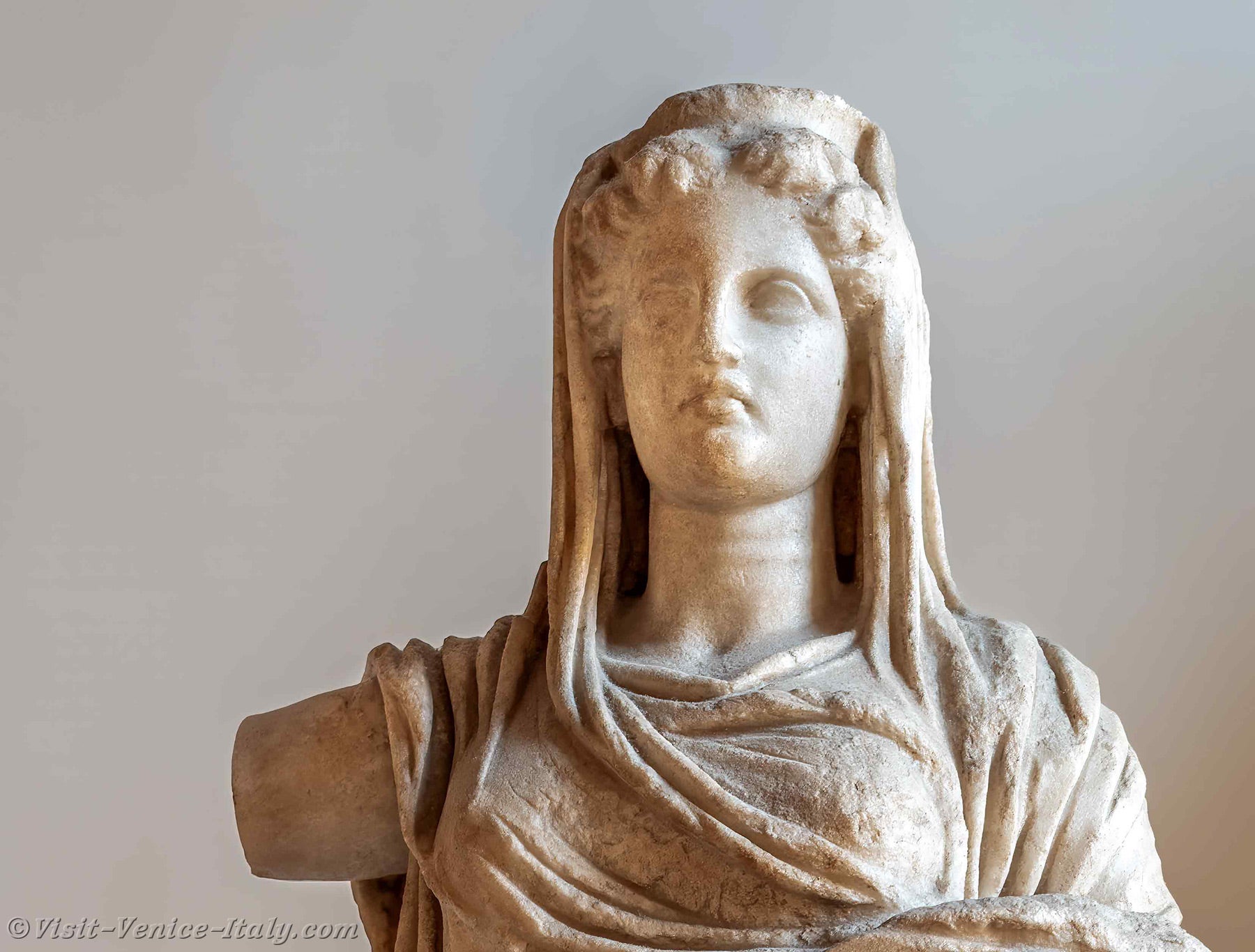
The goddess Demeter at the Archaeological Museum of Venice
Cepisodotus the Younger “Demeter”
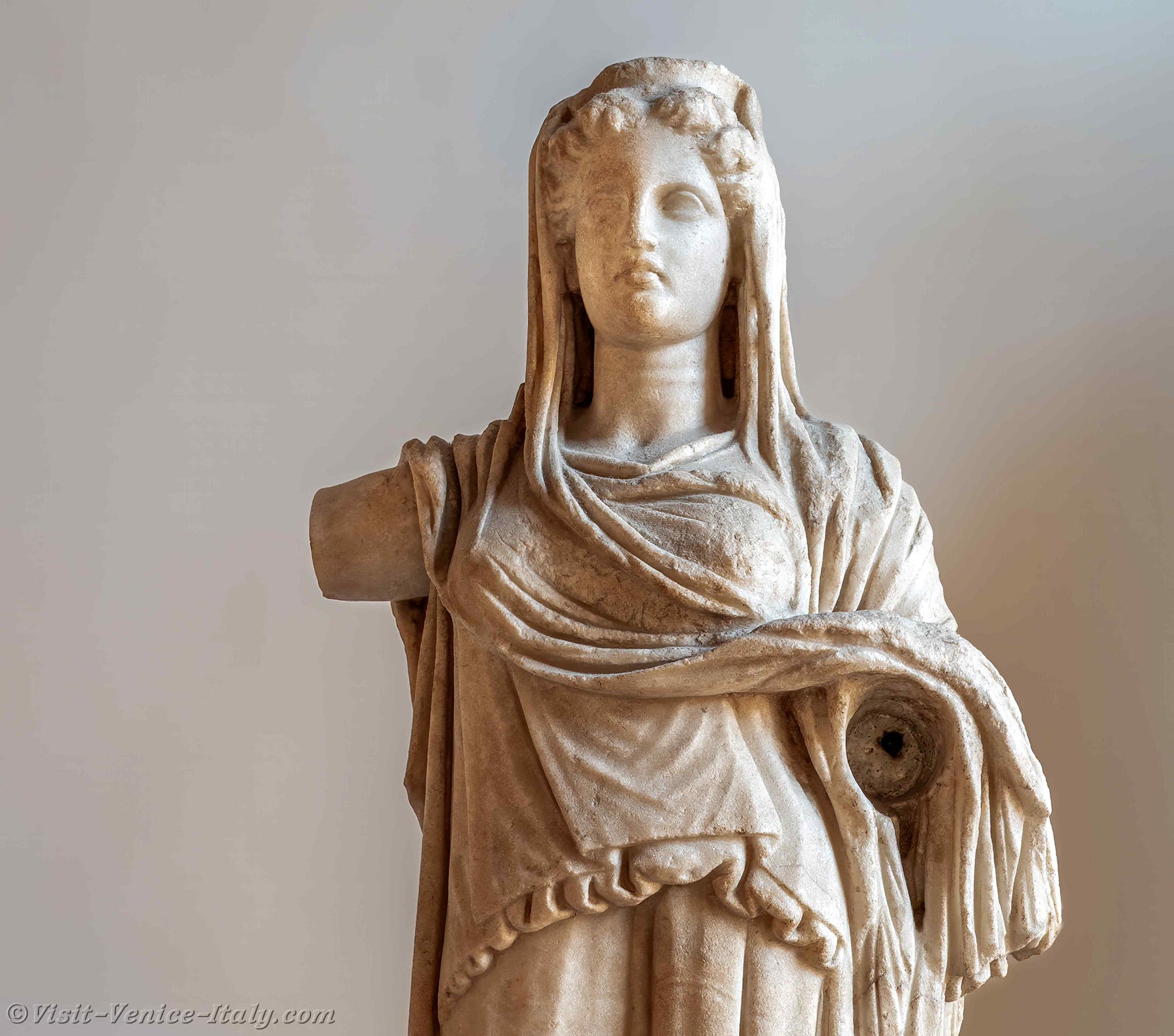
Demeter Sculpture – Marble (77 cm) 4th century BC
Cephisodotus the Younger was the eldest son of the famous Greek sculptor Praxiteles.
He is credited with numerous works of great quality, including this Demeter on display at the National Archaeological Museum in Venice.
Demeter was the daughter of Cronus and Rhea, and therefore the sister of Poseidon, Hades and Zeus.
She was the mother goddess of the Earth and of agriculture, for she taught mankind how to work the land, by ploughing and sowing.
Demeter When her daughter Persephone was abducted by Hades, the king of the dead, Demeter set out in search of her across Greece and ceased to tend to the crops on earth for nine nights and nine days.
With the crops abandoned by their protector and benefactress, famine began to threaten the earth.
Zeus eventually sent Hermes to Hades to tell him to release Persephone and return her to Demeter.
Alas, Persephone had already eaten a pomegranate seed whilst she was in the underworld.
Now, anyone who accepted food from Hades became eternally imprisoned in the underworld.
Demeter Zeus was then forced to make a pact with Hades whereby, every year, Persephone would spend the winter underground in the realm of the dead and the rest of the year on earth with her mother Demeter.
This is how, according to the Greeks, the seasons were created.
Demeter and Persephone were honoured in the Eleusinian Mysteries.
Persephone, goddess of germination and queen of the Underworld, was known as Proserpina to the Romans.
Goddesses Aphrodite | Artemis | Athena | Demeter | Hecate | Hermafroditus
Artworks The Goddesses | The Dignitaries
Archaeological Artworks | Location Schedule Tickets Authorizations
Back to Top of Page