

Archaeological Artworks | Location Schedule Tickets Authorizations
Artworks The Goddesses | The Dignitaries
Goddesses Aphrodite | Artemis | Athena | Demeter | Hecate | Hermafroditus
The goddess Aphrodite at the Archaeological Museum of Venice
“Aphrodite and Ares”
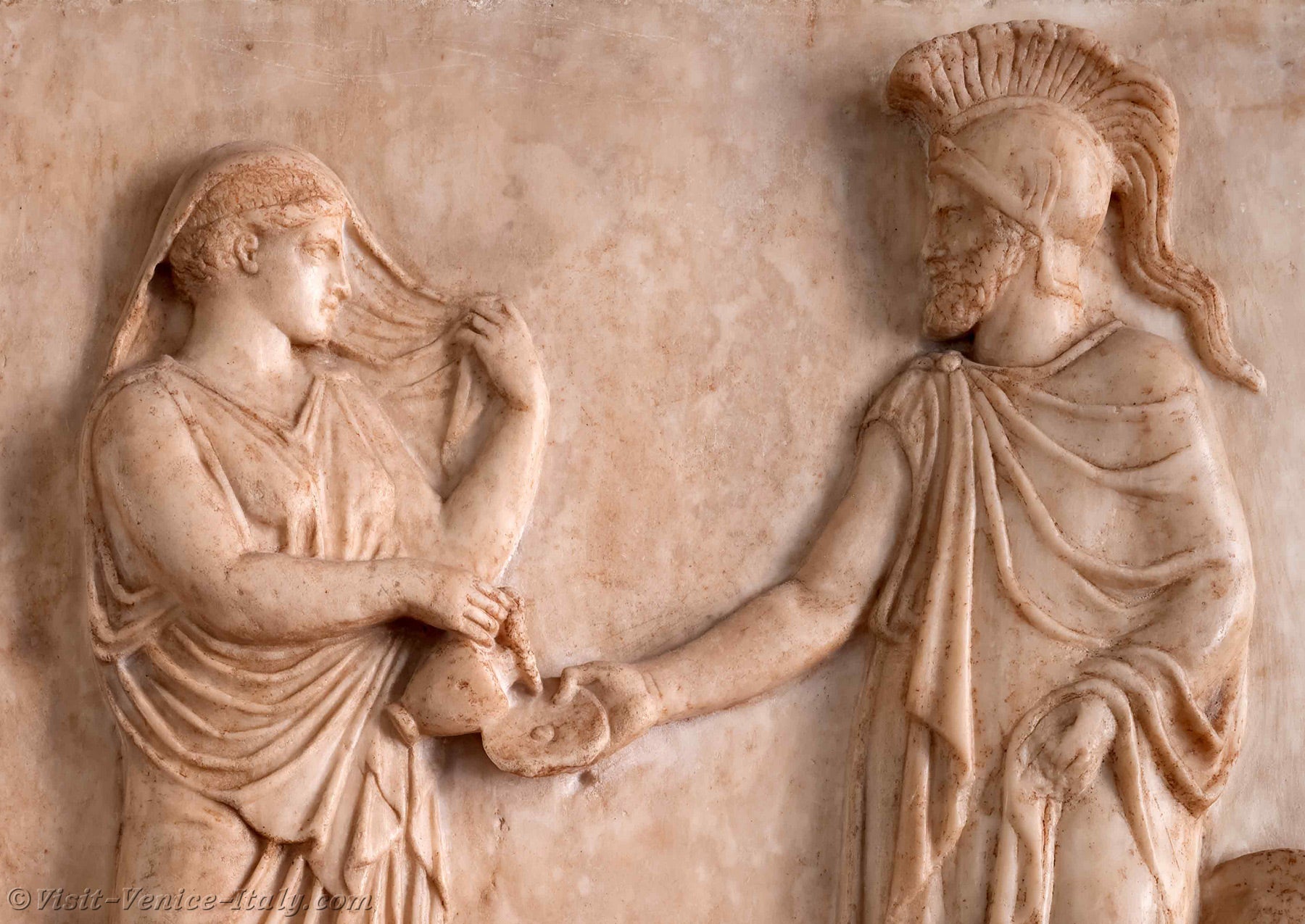
Votive relief – Pentelic marble (51 x 52 x 4 cm) 420 BCThis votive relief depicts Aphrodite pouring wine for Ares, son of Zeus and Hera, the god of war known as Mars in Roman mythology.
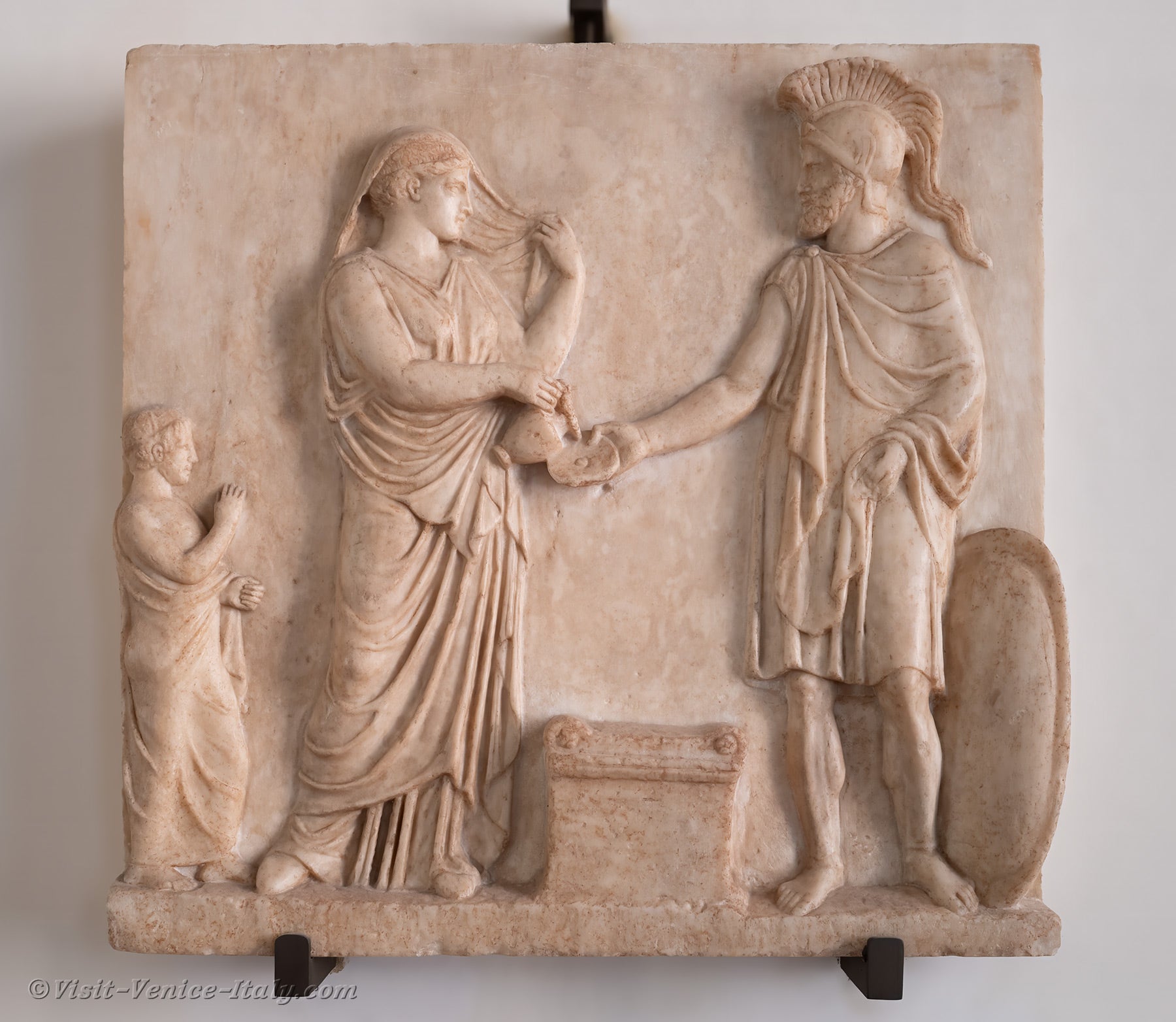
Aphrodite and Ares Aphrodite is dressed in the women’s tunic of ancient Greece and a peplum covering her bust and hair; Ares wears the helmet of a Greek warrior and holds his round shield, which he has placed on the ground.
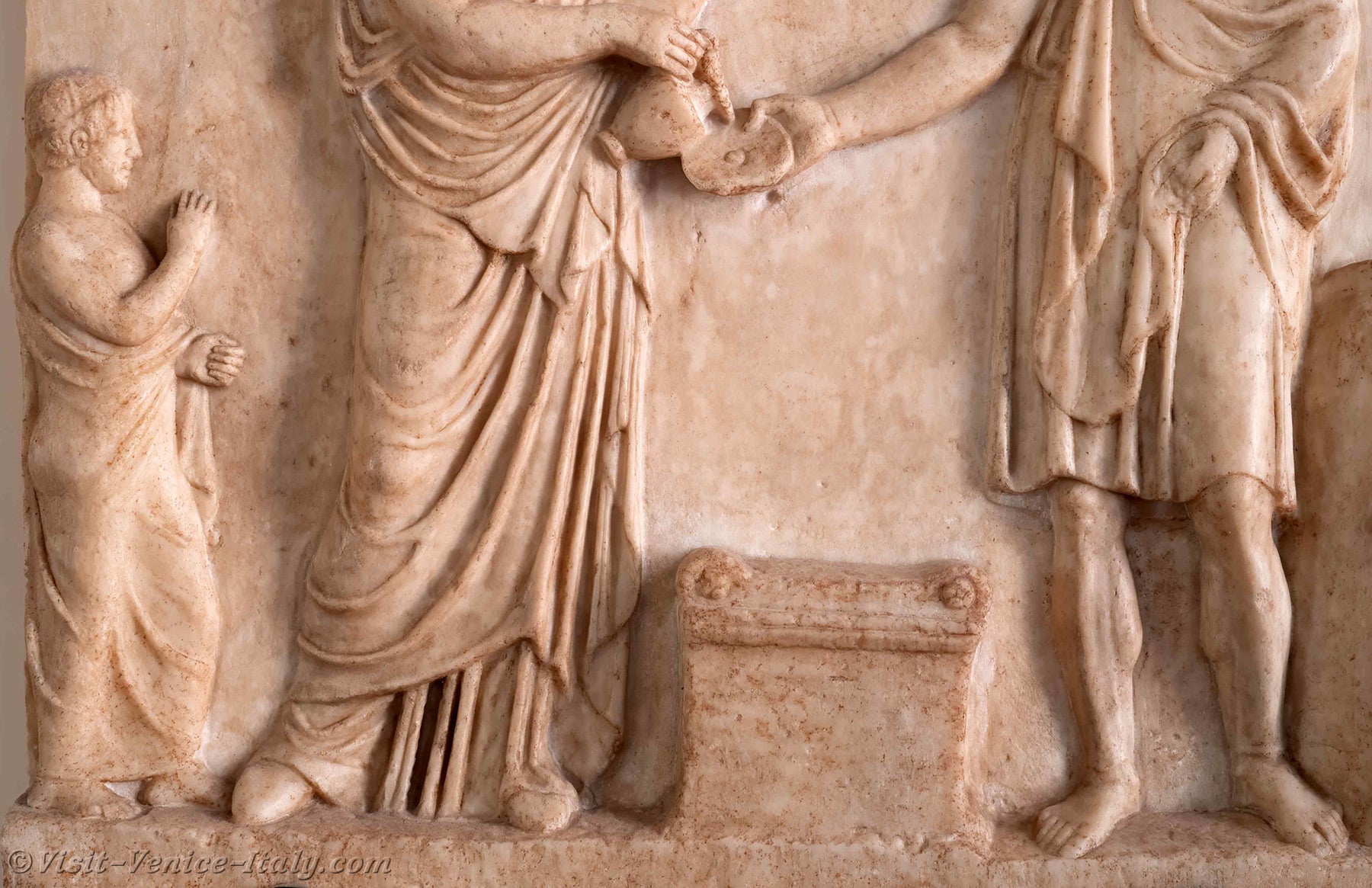
Aphrodite is pouring wine from an oenochoe, the wine jug of the time: the wine is poured into Ares’s pater, just above the altar dedicated to Zeus situated between them.
This means that Ares is about to make a libation in honour of Zeus (known as Jupiter in Latin) before setting off to war.
This is clearly a votive relief from a temple, given the depiction of this religious scene of a libation before battle and the presence of the worshipper standing behind Aphrodite.
“Aphrodite Marine”
Sculpture – Marble (Height 126 cm) 1st century BC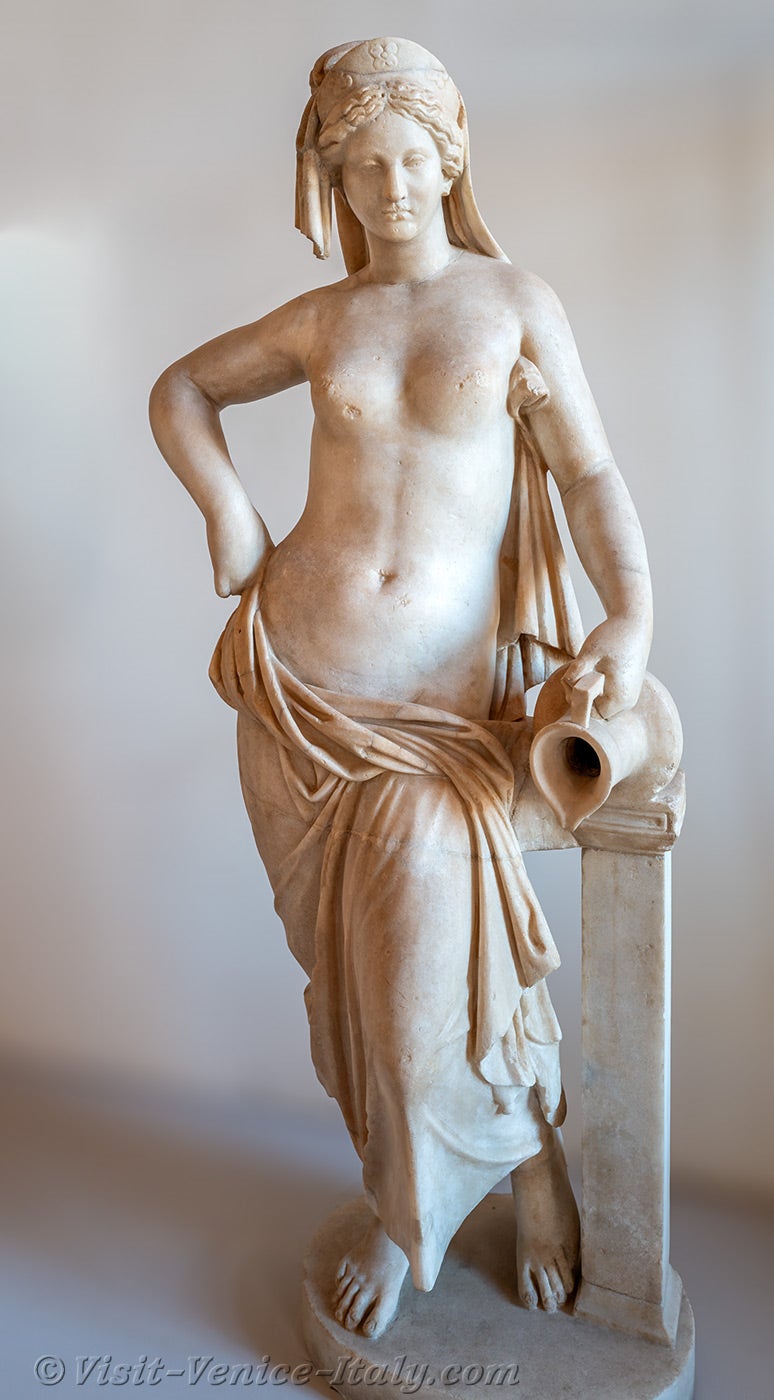
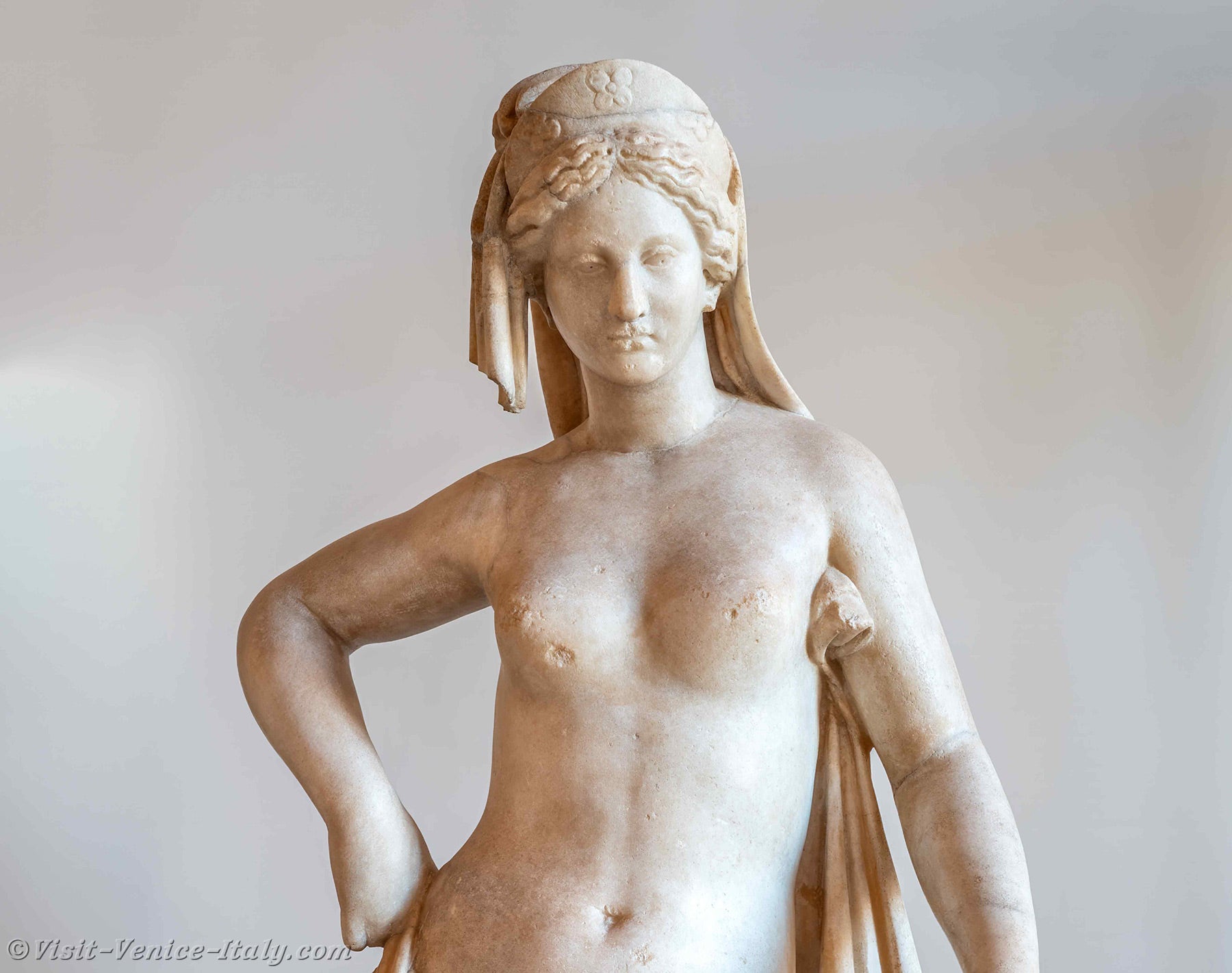
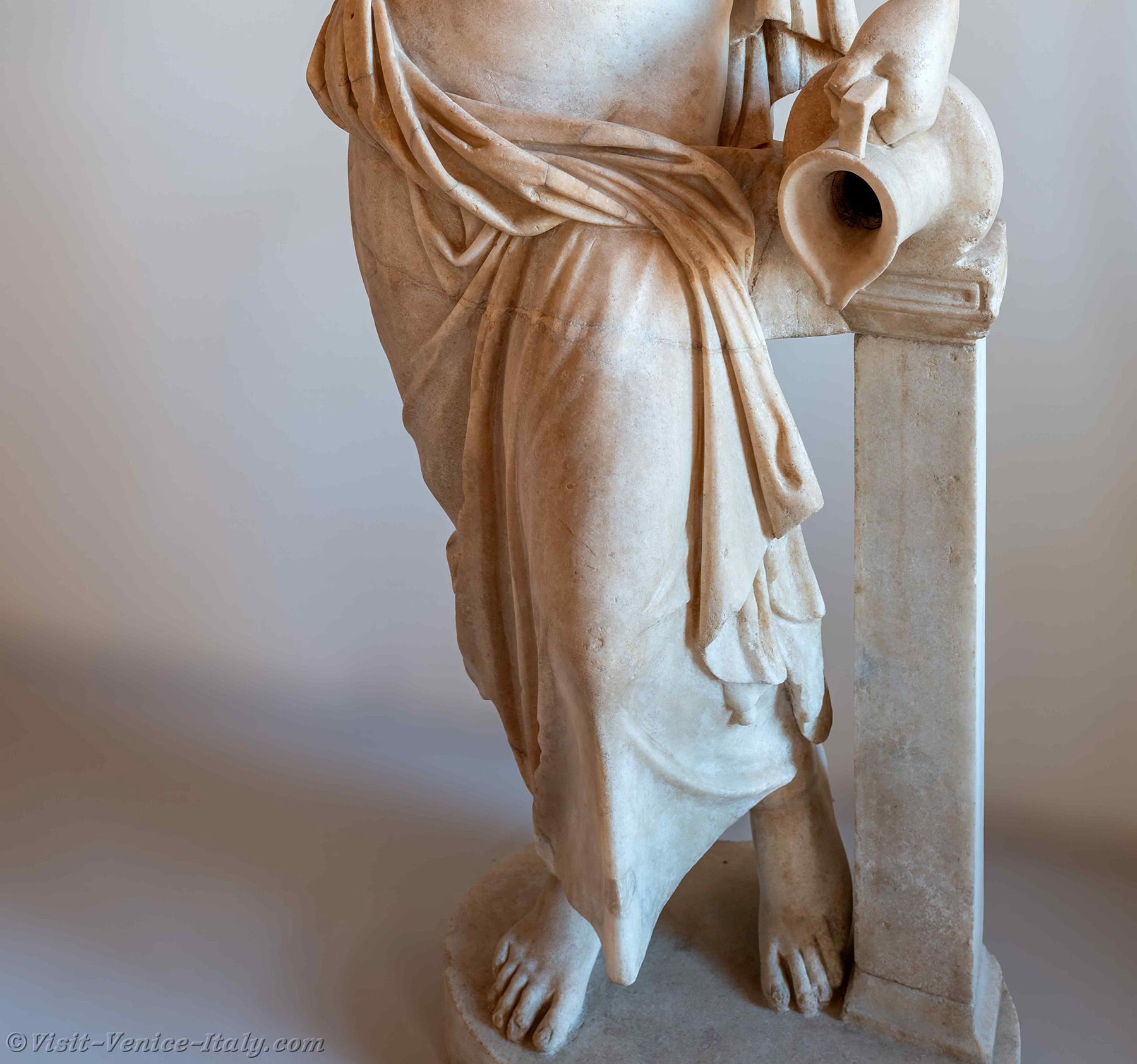
Aphrodite Marine Aphrodite or Venus, the goddess of love is also the goddess of the sea emerging from the waves, as in The “Birth of Venus” painted by Sandro Botticelli.
As the goddess of the sea and protector of sailors, she was known as Thalassa: born of the foam.
In fact, the sea goddess Aphrodite was often worshipped alongside Poseidon.
According to Hesiod, Aphrodite’s birth is particularly unusual:
Gaia, goddess of the earth, was married to Uranus, the god of the sky; but she complained that he made love to her brutally and hated the children born of their union, for he prevented them from leaving their mother’s earthly womb.
And so Gaia asked one of her sons, Cronus (the king of the Titans), to cut off his father’s testicles and penis whilst he was erect and to cast them into the sea.
As soon as he fell into the sea, white foam spurted from the severed penis of Ouranos, and from this foam the beautiful Aphrodite was born off the coast of the Greek island of Cythera, in the Aegean Sea.
Hesiod
This sculpture is a Roman copy of a Greek original that was once in Alexandria, Egypt.
Calamis “Aphrodite Sosandra”
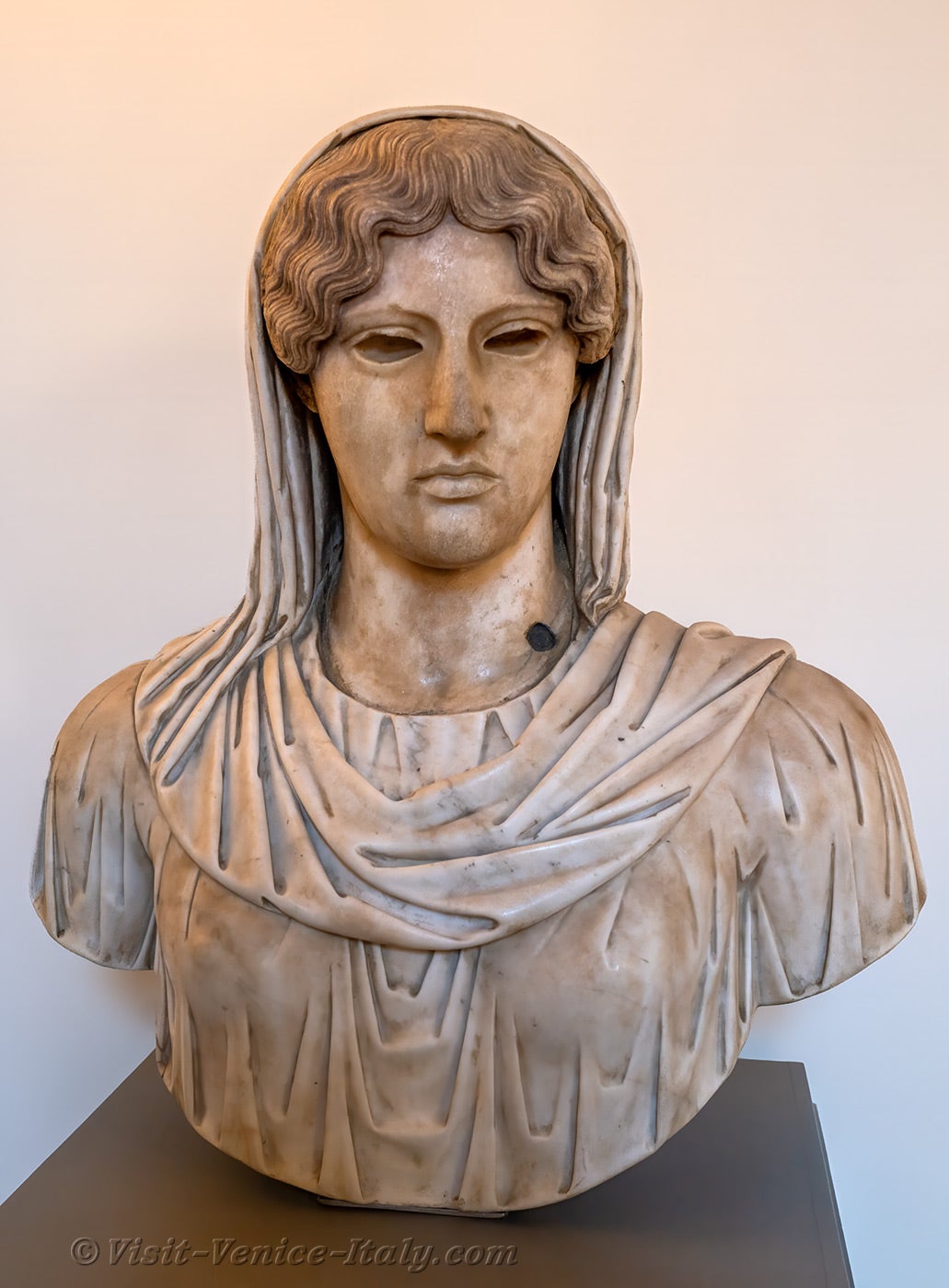
Aphrodite Sosandra Sculpture – Greek marble (Height 59 cm) 2nd century
This bust of Aphrodite is named Sosandra, which means ‘she who saves men’.
This bust echoes the characteristics of a bronze sculpture created by the Greek sculptor Calamis in 465 BC.
One of the finest copies of this statue by Calamis is housed in the Archaeological Museum of Naples, where it is depicted in full length.
One of the attributes of Aphrodite “Sosandra” is the tunic that envelops her and also covers her head.
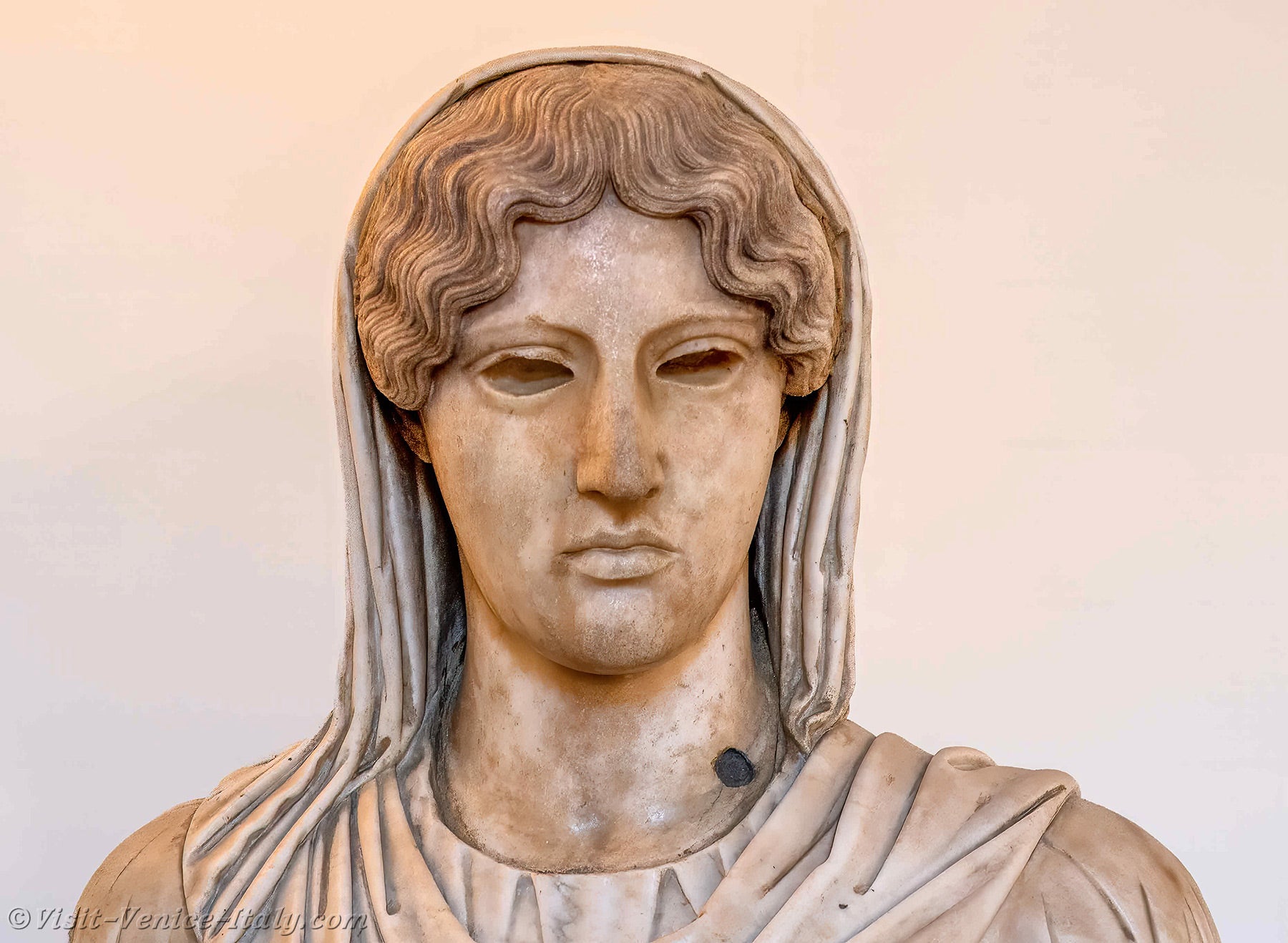
Aphrodite Sosandra We can see here that her tunic is draped around her neck as if it were a wide necklace that delicately accentuates the bosom of the goddess Sosandra, who is also the goddess of love.
Unlike the Marine Aphrodite, where she is bare-breasted, the goddess is here dressed modestly to demonstrate her divine modesty.
The wavy hair, parted in the middle, is one of the attributes found in this type of depiction of Aphrodite.
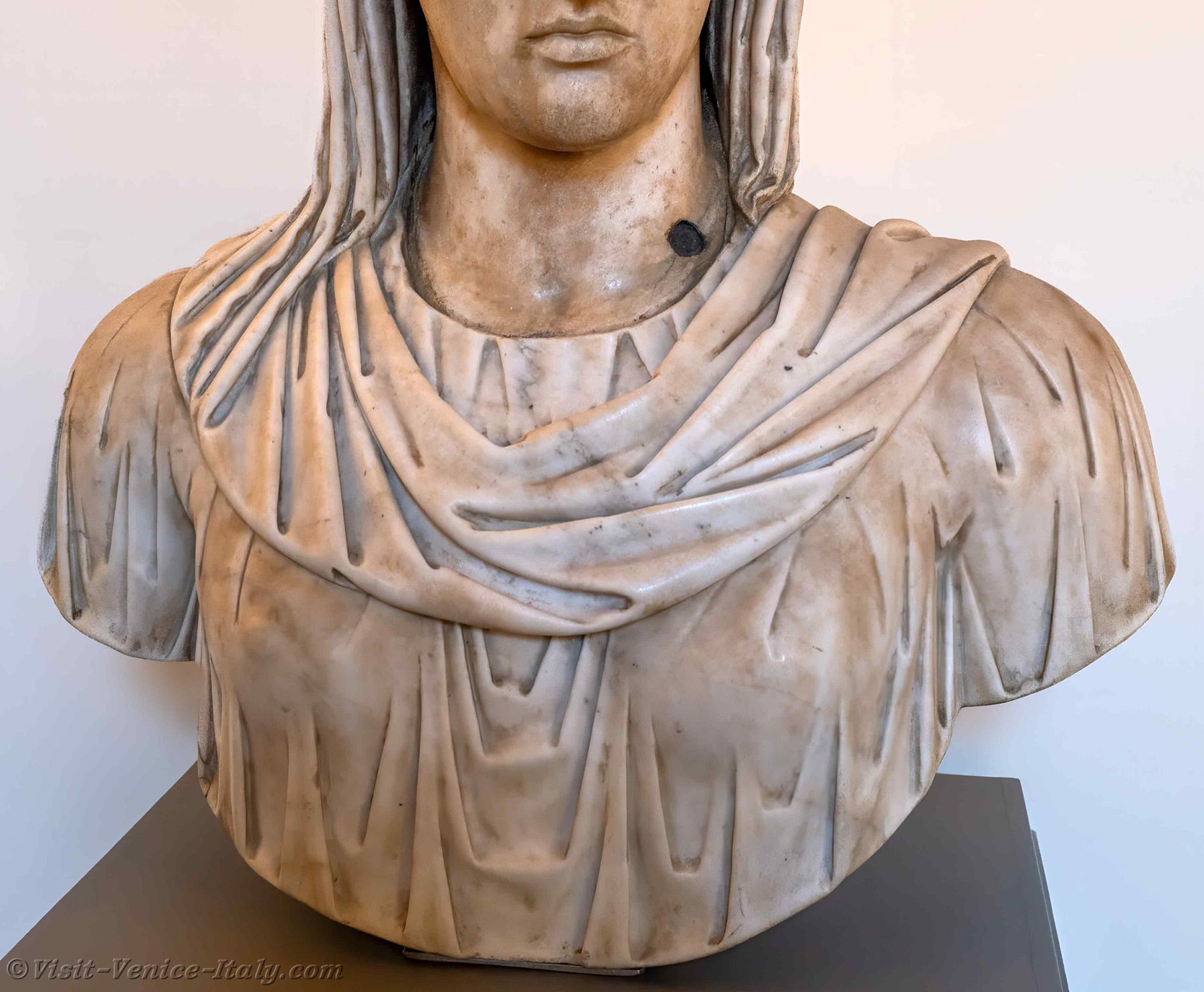
Aphrodite Sosandra It should be noted that the head of the sculpture was added to a Carrara marble bust, carved from a Roman plaster cast.
The Aphrodite Sosandra served as a model for portraits of high-ranking Roman women.
The artist was thus able to convey both their solemn grace and their modesty.
This fashion was mainly followed during the Nerva-Antonine period, when the Nerva-Antonine dynasty reigned over the Roman Empire from 96 to 192.
“Head of Aphrodite”
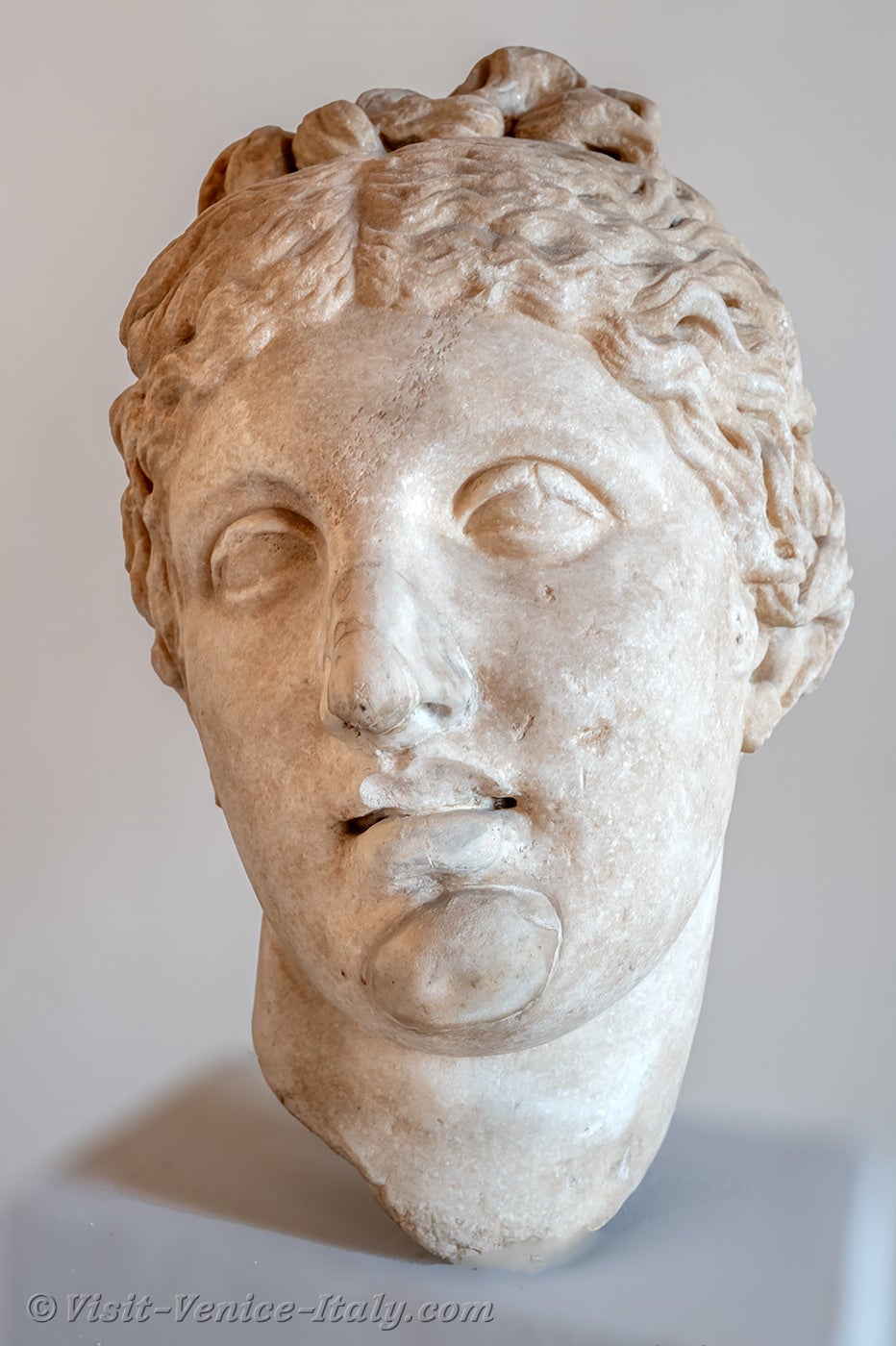
Head of Aphrodite Sculpture – Greek marble (Height 36 cm) 2nd century BC
One immediately notices that she has the same style of hairstyle as the Aphrodite Sosandra.
A centre parting divides the goddess’s hair into two symmetrical sections on either side of her face.
However, unlike the Aphrodite Sosandra, whose hair is covered, here we can see that the goddess of love’s wavy hair is gathered into a bun at the back of her head.
Her slightly parted lips and her head tilted slightly backwards suggest her surrender… to pleasure?
Goddesses Aphrodite | Artemis | Athena | Demeter | Hecate | Hermafroditus
Artworks The Goddesses | The Dignitaries
Archaeological Artworks | Location Schedule Tickets Authorizations
Back to Top of Page