

Restaurants Cafés Restaurants | Famous Cafés
Cafés Café Florian | Café Quadri
Florian Since 1720 | Celebrities | Rivalries
Florian is Refined, Quadri is Military: The Rivalry Between the Two Cafés
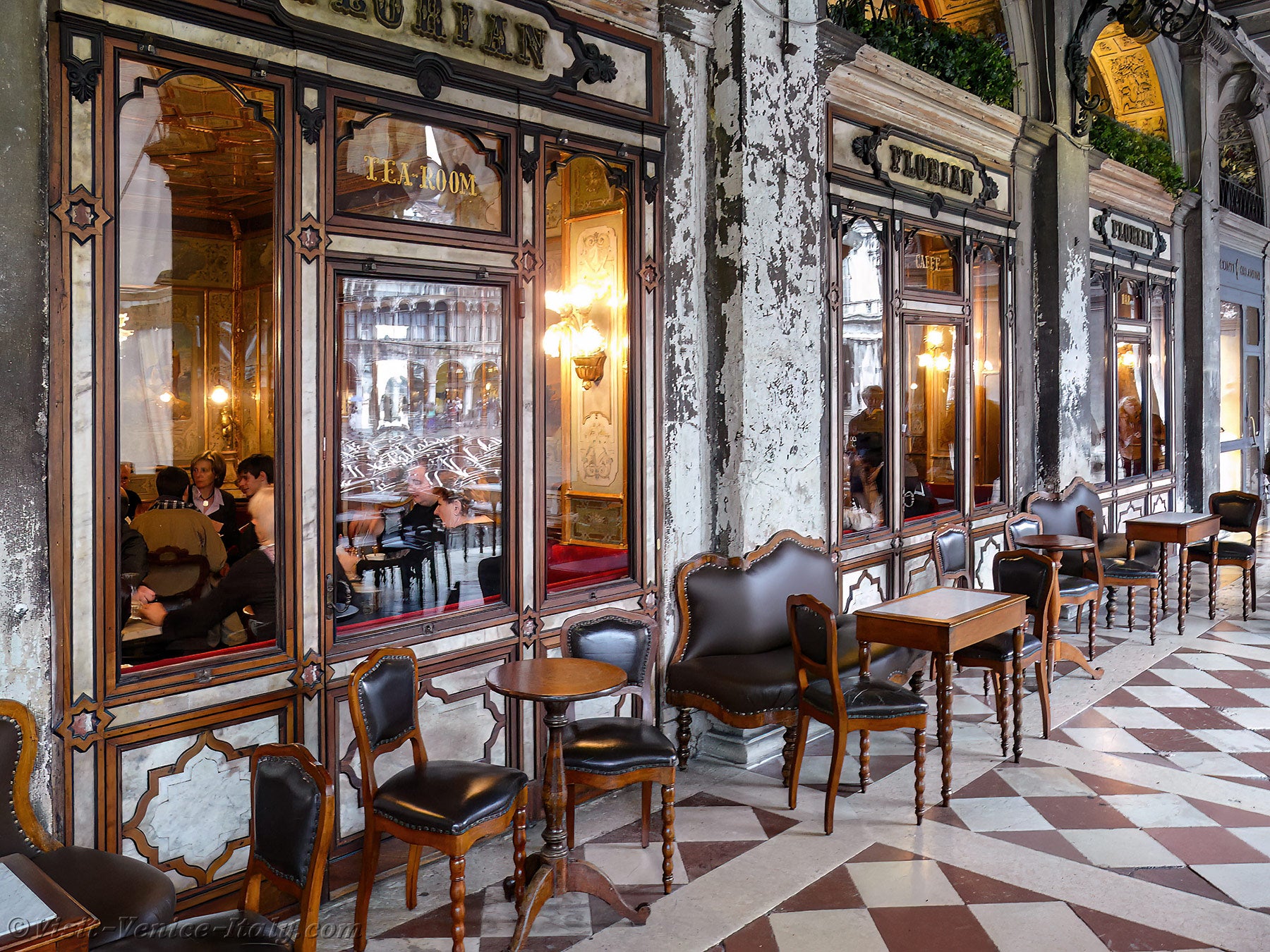
The Café Florian The rivalry between the two great cafés in St. Mark’s Square, the Florian and the Quadri goes back a long way, with different atmospheres, but also different clientele, particularly as seen below in 1844, when the city was still occupied by Austrian troops.
“In summer, these two establishments compete over the number of tables and chairs they scatter across the square, in front of their arcades.
The crowds stop there to enjoy sorbets.
But both inside and out on the square, Café Florian retains a more aristocratic and exotic air than any other.”
Jules Lecomte – Venice 1844
Further on in his book, the same Jules Lecomte details the differences between the two cafés:
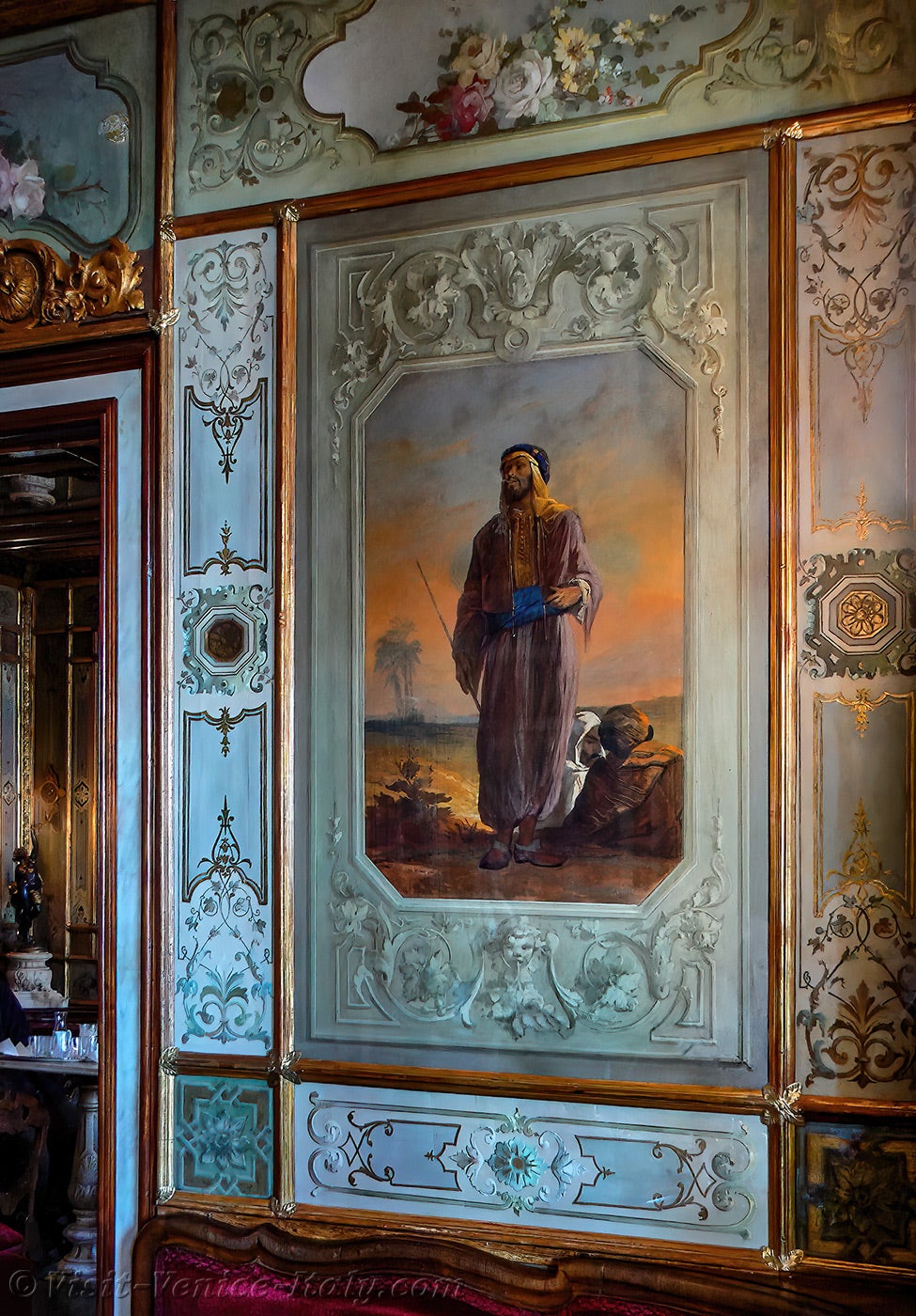
The Café Florian
“In St. Mark’s Square, the heart of Venetian café culture, every nationality and every social group has its favourite venue, its favourite meeting place.
- Florian is quiet and relaxed.
Café Florian and Café Militaire, or Quadri, are the two main ones. They face each other, one on either side of the square, like two rivals sizing each other up across the arena.
- Quadri is boisterous and rowdy.
- Florian is gallant, like the dragon captain of poetry after whom it is named; he welcomes the ladies, fetches them the fashion magazine, slips a small stool under their feet, closes the door to keep out the draught, and calls over the itinerant flowermonger.
- Quadri, on the other hand, only admits ladies to his doorstep, in front of his open-air arcades. In his place, one may smoke… and God knows if people make the most of that privilege!
The Café Florian The winter rooms transport us to the atmosphere of Dutch smoking rooms the moment we step inside Florian’s.
- Quadri is Venetian-German.
- Florian is Franco-Venetian; that’s the whole difference.
Foreigners passing through Venice – the English, and the French in particular – take to the name Florian.
It’s a name that has travelled as far as beyond the Alps.
It is known to be a sort of hub where, when the newspapers arrive, one can meet one’s compatriots and friends who are travelling.”
Jules Lecomte – Venice 1844
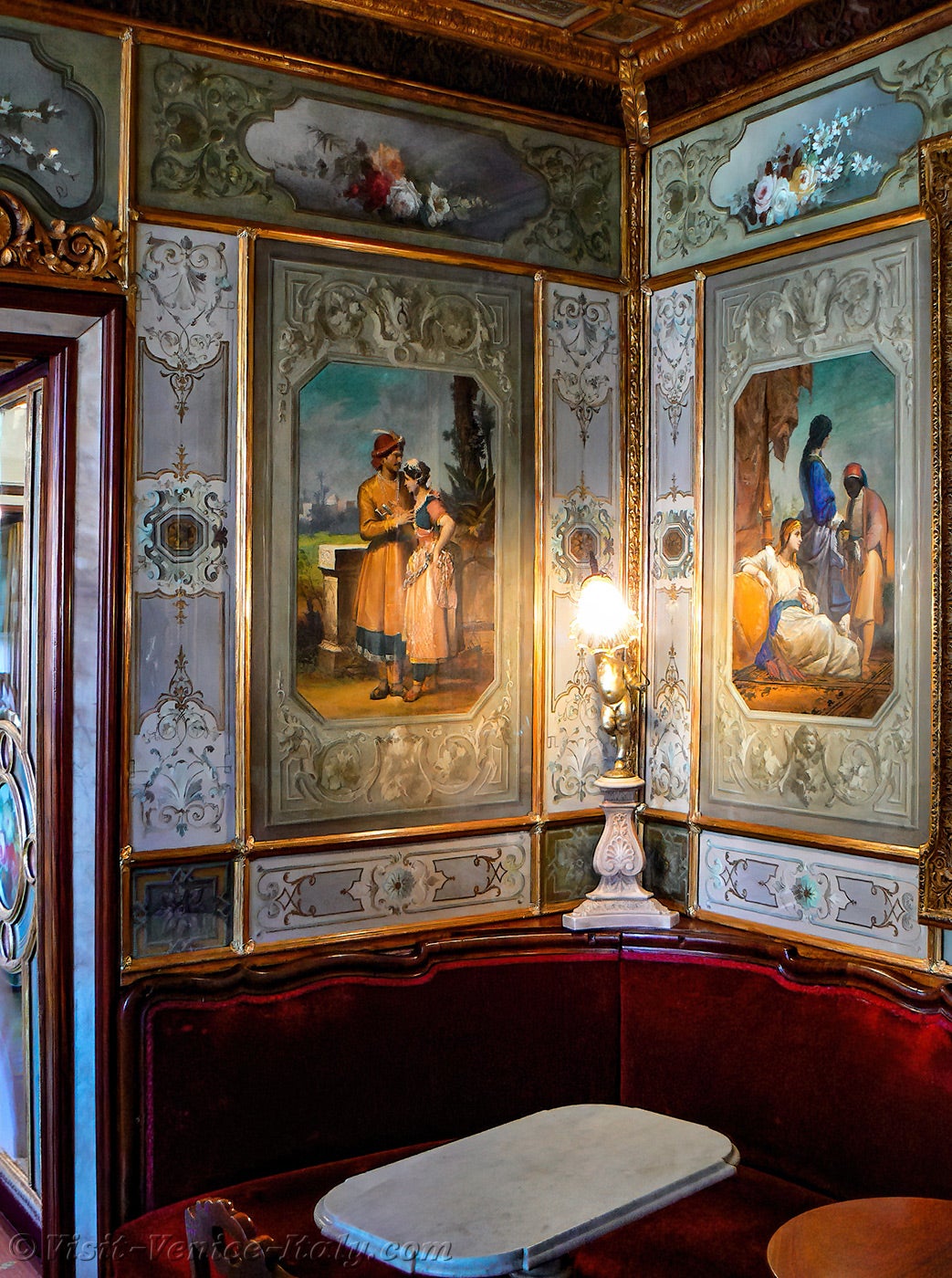
The current interior of Café Florian dates from 1858
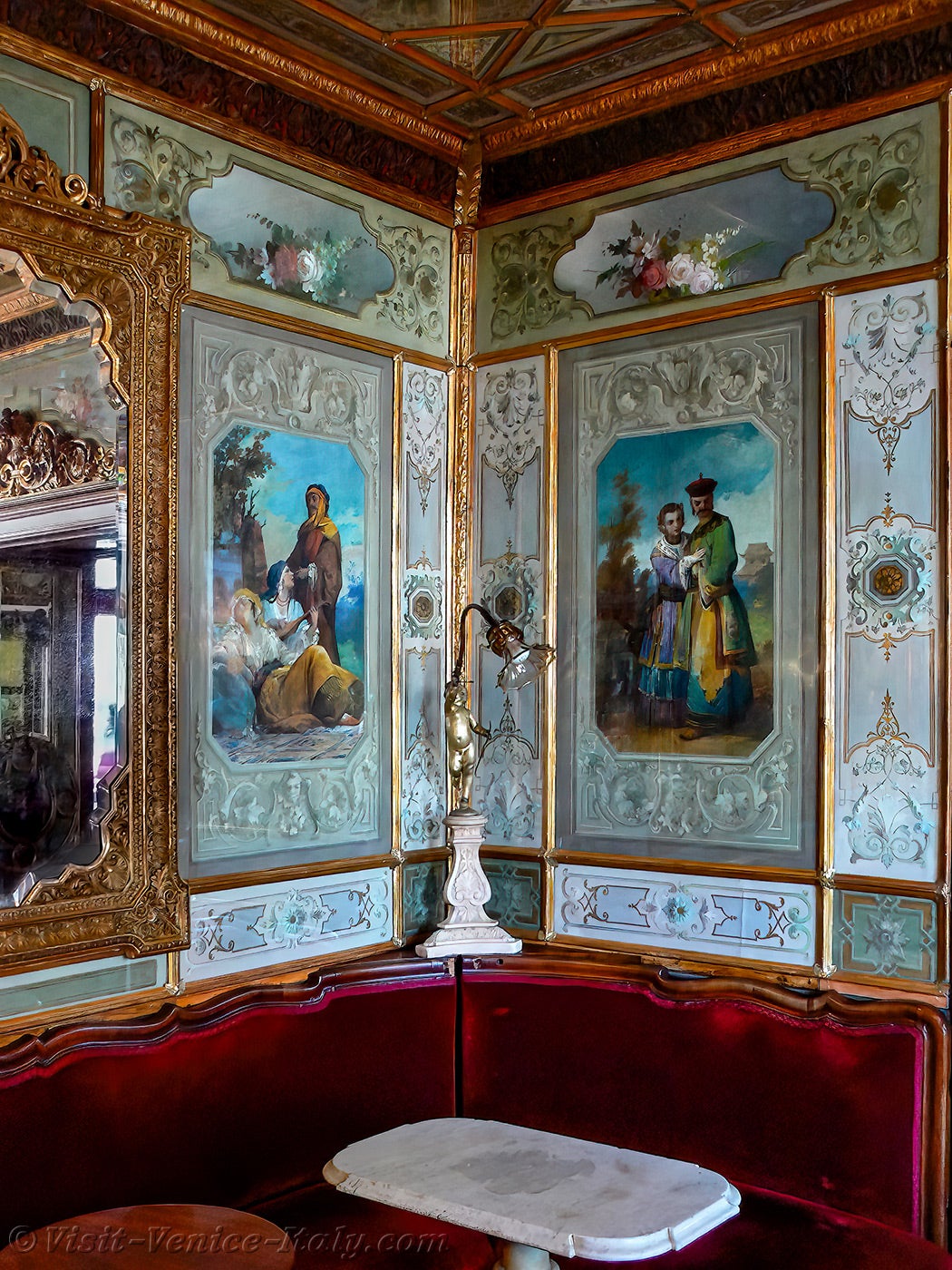
The Florian Chinese The current interior of Café Florian is no longer the original one.
In 1858, Ludovico Cadorin completely redecorated the Florian, and the café was then extended to include two additional rooms.
It is this décor by Ludovico Cadorin that still gives it its opulent feel today – or, as some would say, its ‘bonbonnière’ charm.
The frescoes, paintings, mirrors and lamps – everything is designed to lend a touch of intimacy and, at the same time, luxury.
The ‘Chinese’ at Café Florian
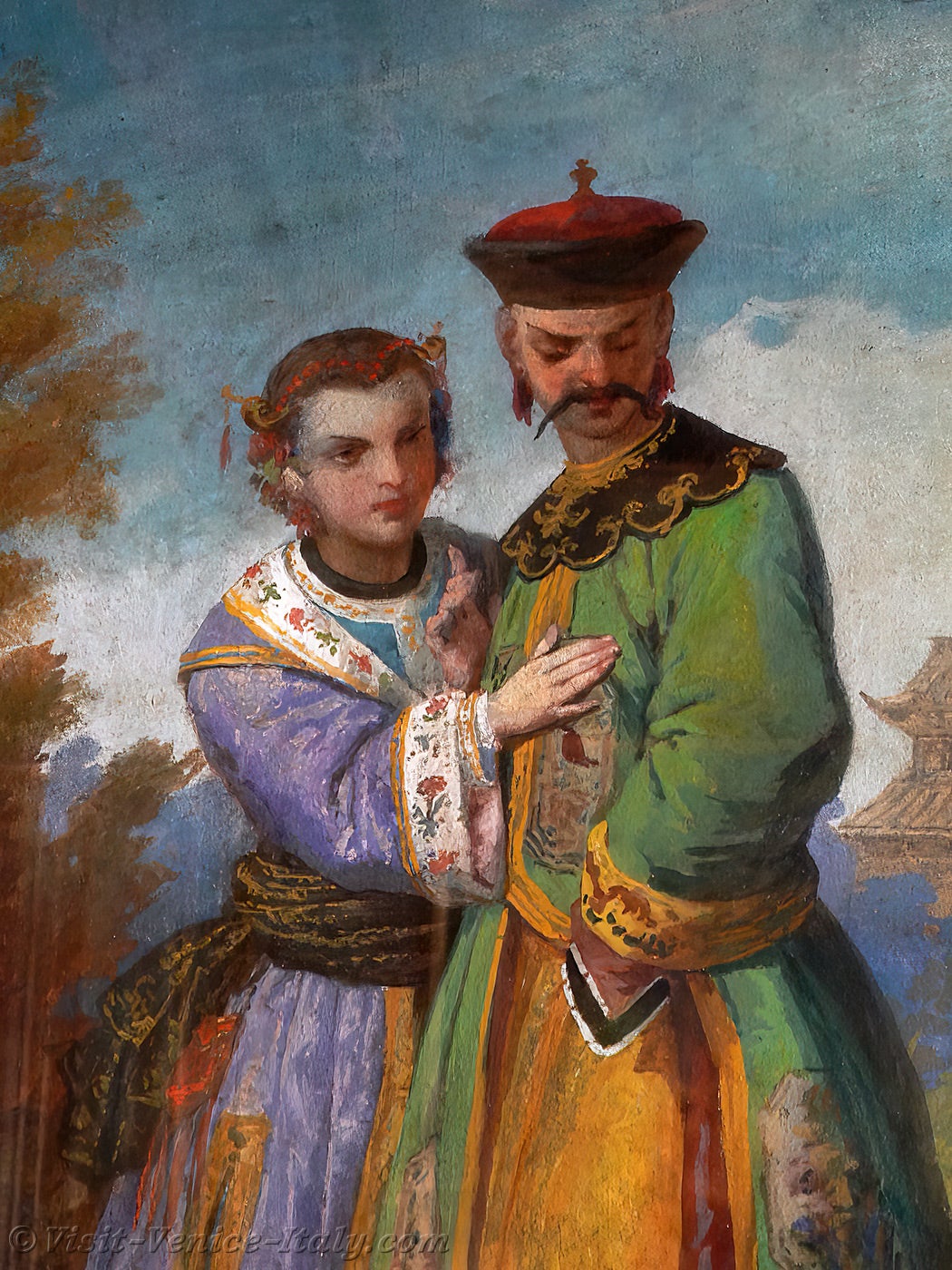
Among the most famous paintings at the Florian is, of course, the famous Chinese man, a venue within the Florian itself and immortalised by Henri de Régnier in his “Venetian Tales”: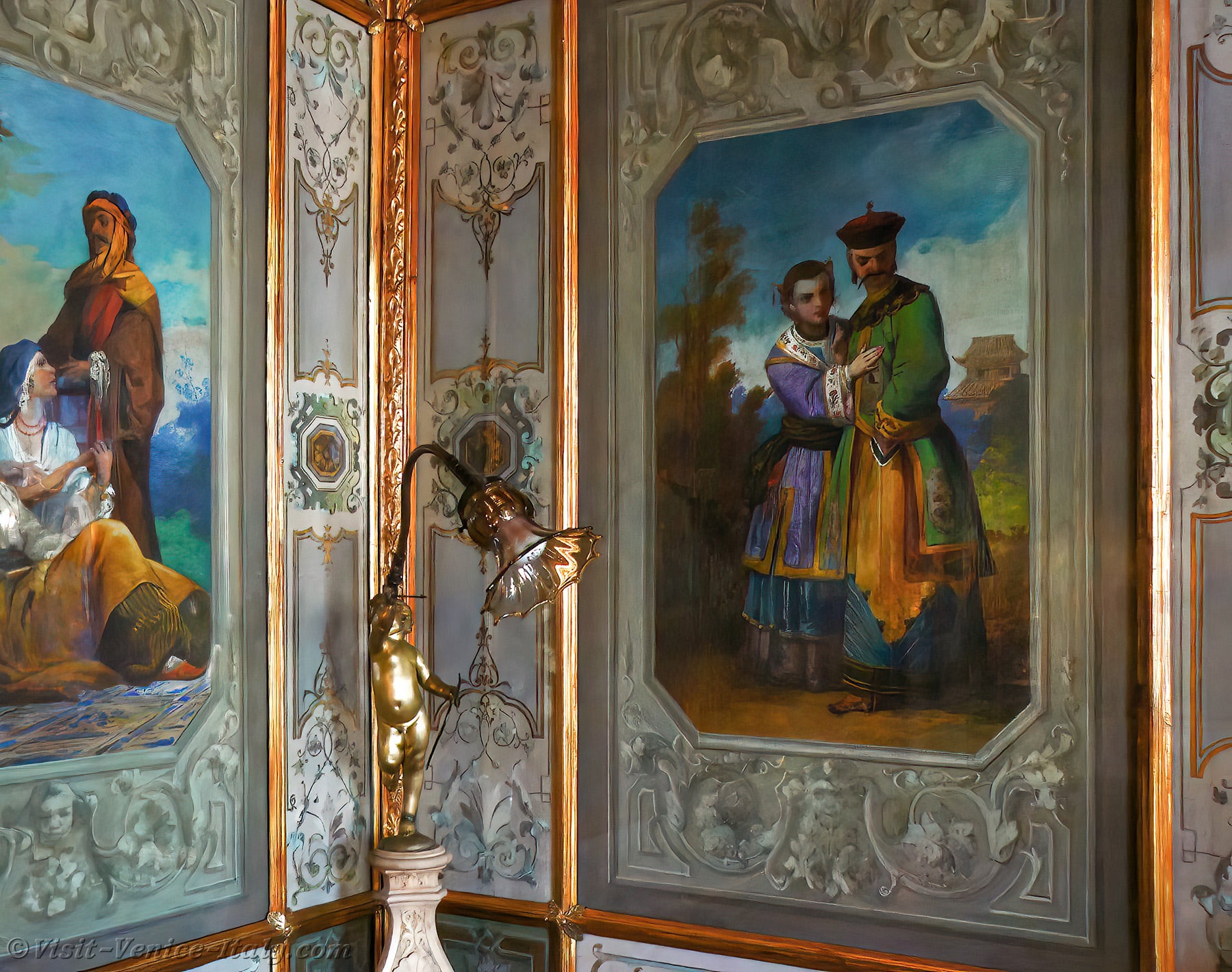
The Florian Chinese
“Café Florian, as we know, consists of several small adjoining rooms, each decorated differently and with the air of a drawing room.
Of these drawing rooms, there was one that I was particularly fond of.
The walls are adorned with mirrors and frescoes, which have been placed under glass to protect them from smoke and damage.
These frescoes depict people in costume from various nations.
Two of these figures, amongst others, amused me: a Turk in a turban and a Chinese man with a plait.
The Florian Chinese It was under the ‘Chinese’ that I most enjoyed taking my seat on the red velvet bench, in front of one of those round marble tables whose top rotates on the single leg that supports them.
[…] I certainly had done the right thing in stepping into that old, beloved Florian, where I had once spent so many evenings, and in coming to sit beneath the Chinese man.
I turned halfway towards the figure in the fresco.
The Chinese Man regarded me with a good-natured, mocking air and seemed to be congratulating me on having paid him a visit before returning to the hotel.”
Henri de Régnier.
A host of celebrities flock to the Florian
The Florian, a must-visit venue for the Venetian intelligentsia and visitors alike, welcomed the famous Carlo Goldoni and his literary rival Carlo Gozzi, the sculptor Canova, Paul de Musset, as well as Alfred de Musset and George Sand, Madame de Staël, Charles Dickens, Rainer Maria Rilke, Honoré de Balzac, Henry James, Lord Byron, Marcel Proust, Paul Morand and Henri de Régnier.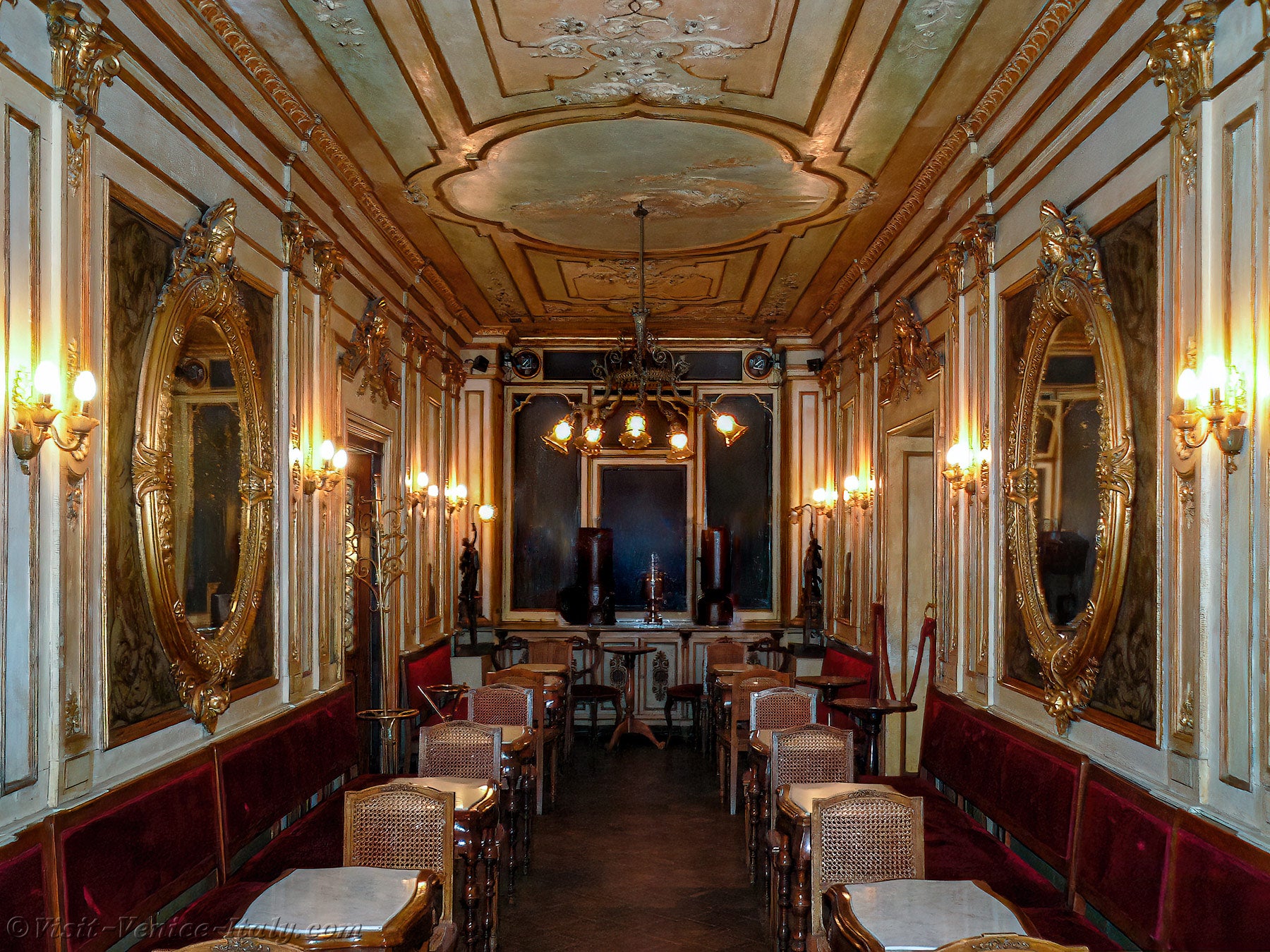
The Café Florian Café Florian has always been, and remains, a favourite haunt of writers and other prominent figures, including Jean d’Ormesson and Philippe Sollers, who penned some of their finest works there.
Finally, and it almost sounds like a joke, Marc Alyn, in his wonderful book on Venice, “Le Piéton de Venise”, recounts:
“I came across the Dalai Lama sitting under the Chinese man, surrounded by his monks, not far from a former Maoist who had turned to spirituality.”
Marc Alyn
Address, opening hours and days of the Café Florian
The Café Florian is still there to offer you a seat beneath the Chinese awning.It is located at number 56, St. Mark’s Square and is open daily from 9.00 am to 11.00 pm
Florian Since 1720 | Celebrities | Rivalries
Cafés Café Florian | Café Quadri
Restaurants Cafés Restaurants | Famous Cafés
Back to Top of Page